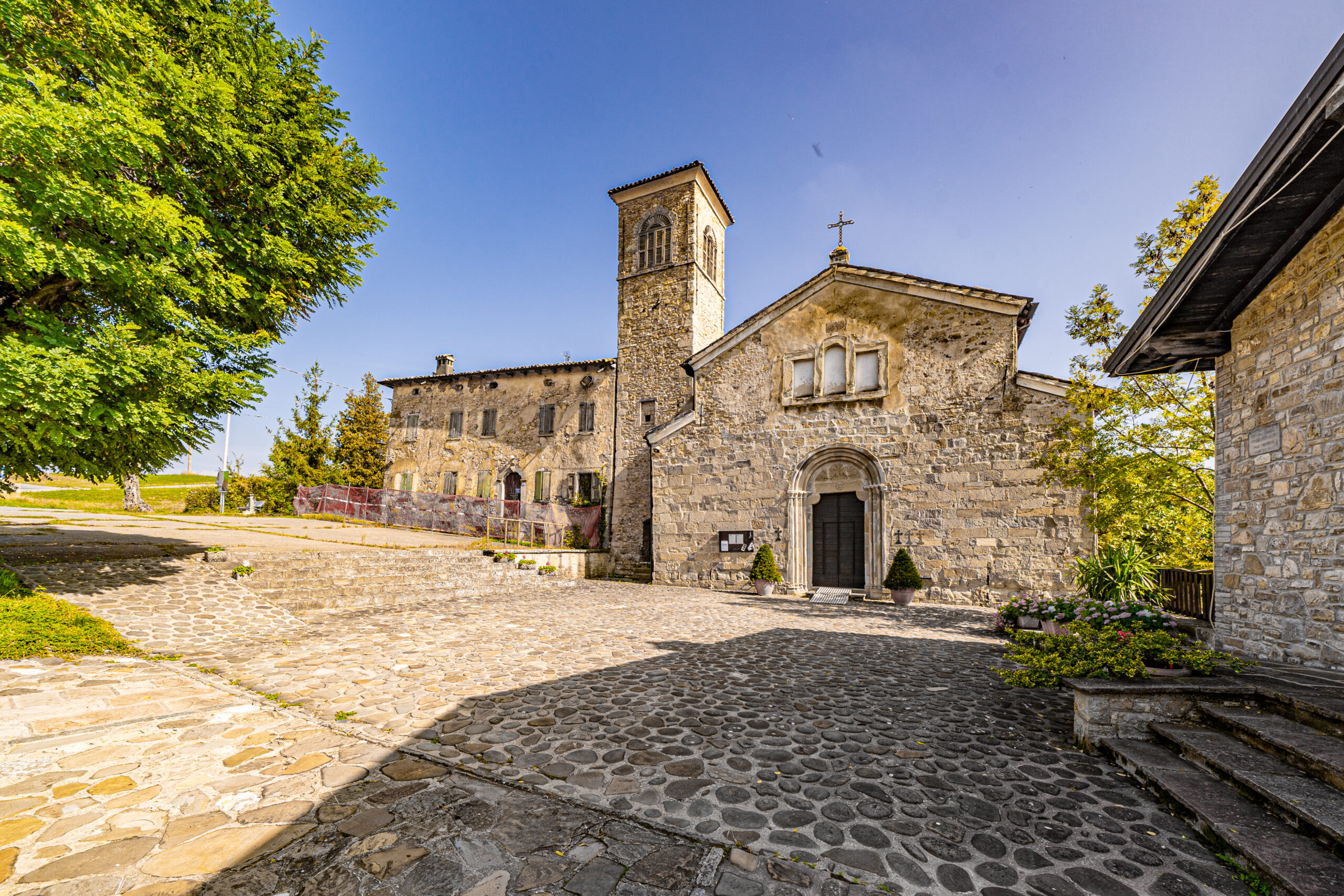
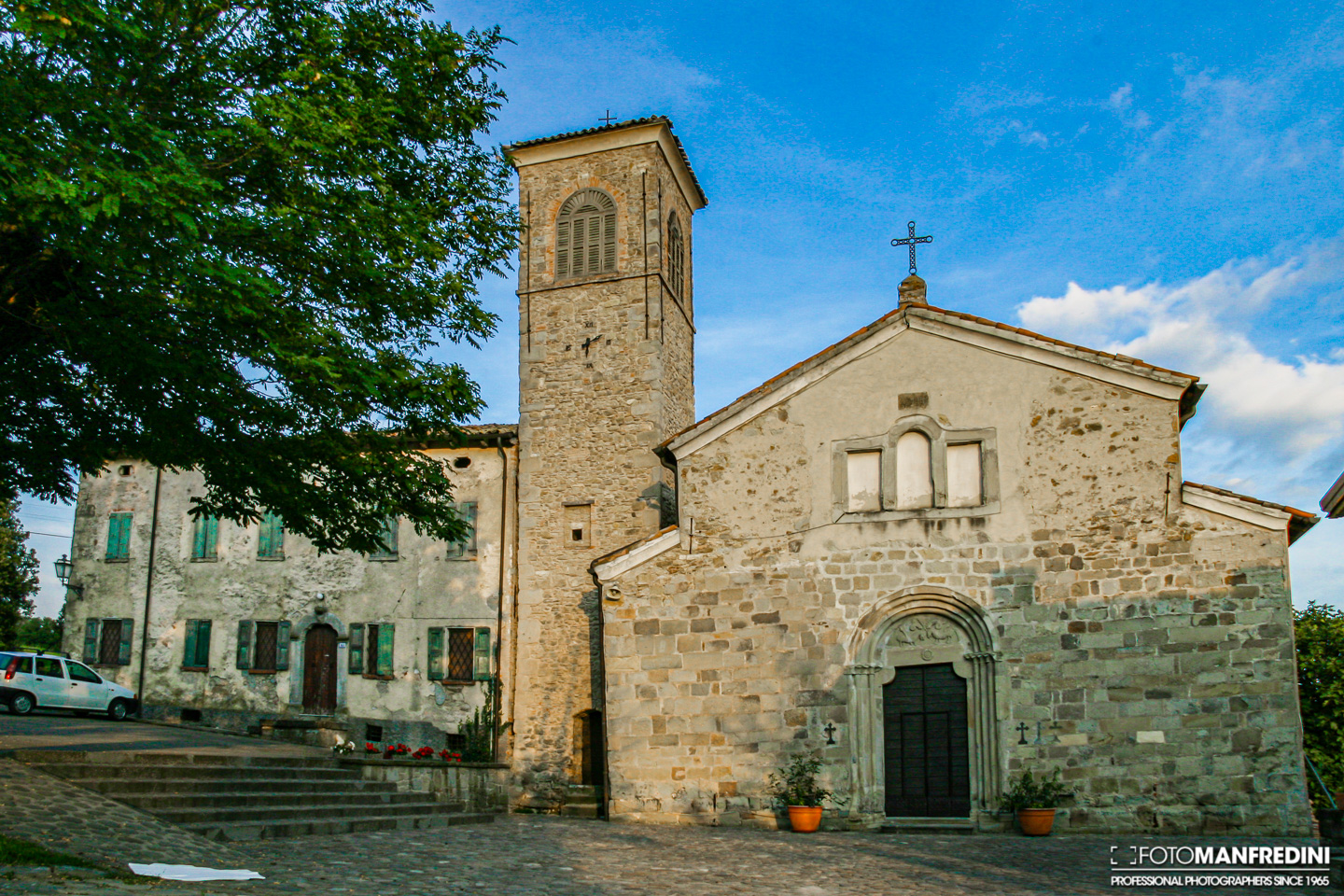
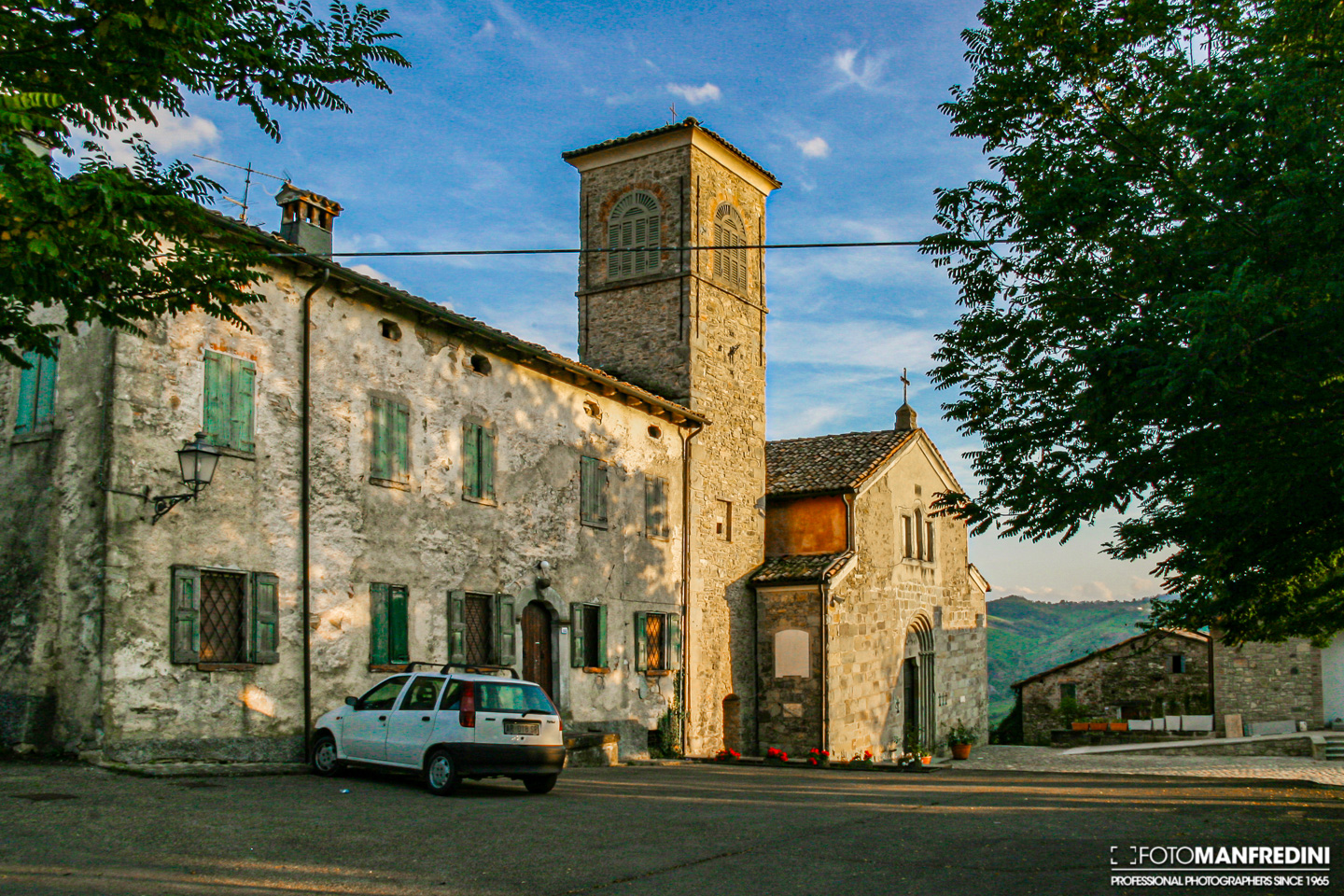
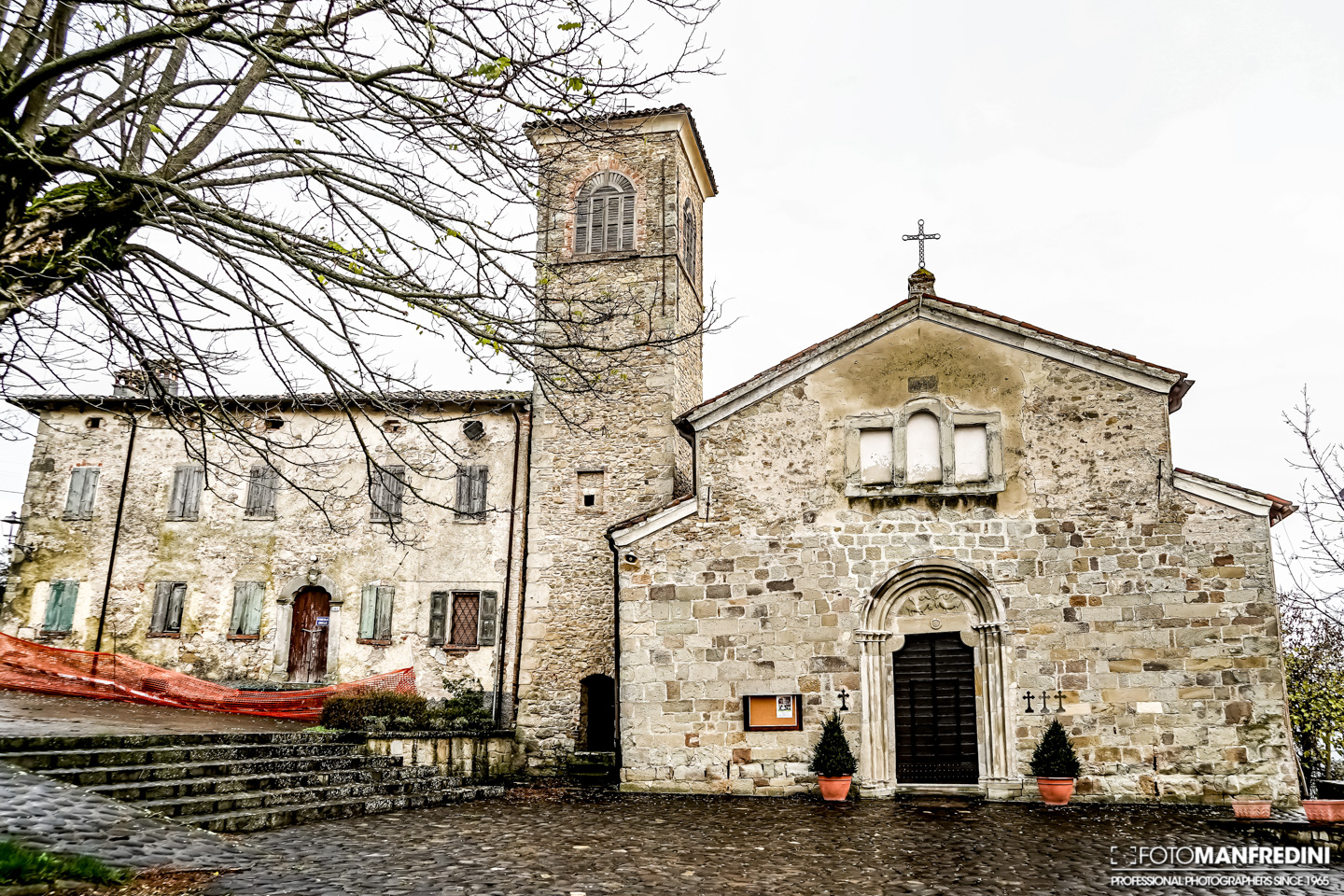
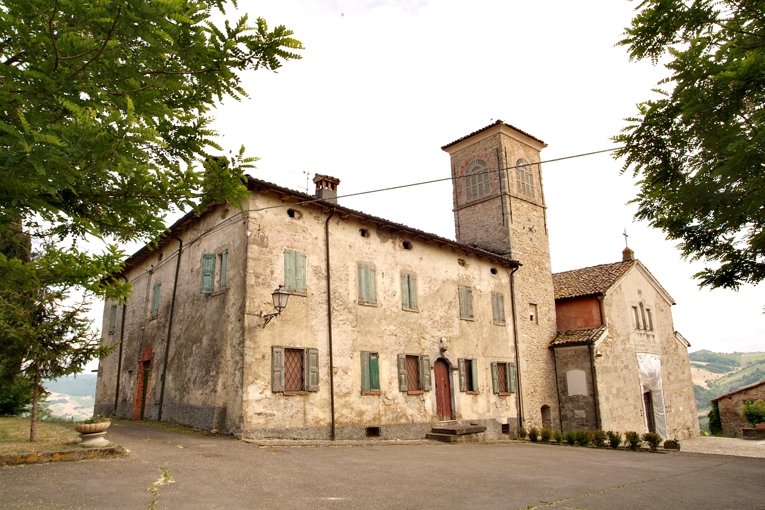
Lungo la strada Pavullo-Vignola, isolata, lontana dai centri abitati, così come era la regola della posizione delle pievi medievali, si incontra la pieve di Coscogno.
La dedicazione al vescovo ravennate Sant’Apollinare testimonia l’antichità della sua primitiva costruzione, che potrebbe risalire all’epoca bizantina; del resto la località è citata nei più antichi documenti frignanesi altomedievali. Presso di essa soggiornò nel 1104 la contessa Matilde di Canossa.
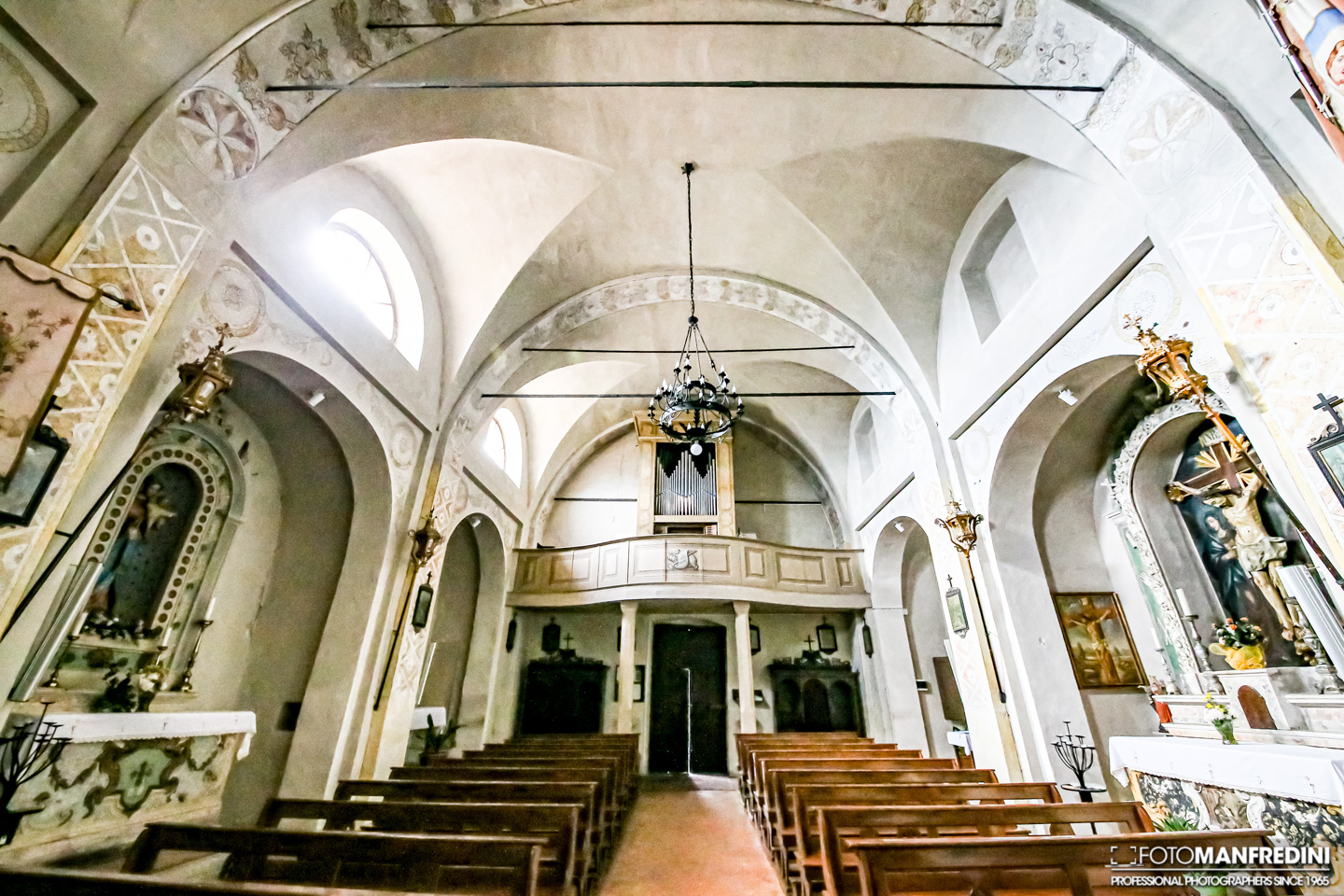
L’aspetto attuale esterno ed interno è il frutto di pesanti ristrutturazioni, in particolare quella subita nel 1648, quando all’originaria facciata a capanna furono aggiunte le due ali laterali e sopra il portale fu aperta la trifora sopra la quale una lapide ricorda i lavori eseguiti.
L’elemento più pregevole della facciata è il portale costituito da tre parti ben distinte: il portale esterno strombato tardo romanico costituito da colonnine e lesene; il portale interno a mensole convesse inserito in epoca successiva (sec. XIV) per consolidare la struttura e, infine, la lunetta (sec. XIII) che, in occasione di un suo forzato adattamento ai rimaneggiamenti del portale, subì una mutilazione nella parte superiore. Il bassorilievo in essa scolpito, riscoperto nel 1920 sotto un’intonacatura secentesca, porta un motivo iconografico che in forme diverse richiama la simbologia dei fregi dell’abside di Monteobizzo e cioè la lotta tra bene e male, che si risolve con la vittoria di Cristo sul male e sulla morte.
Nella lunetta di Coscogno compaiono due capri e due mostri raffiguranti il male e al centro una palma, richiamo nella simbologia cristiana alla Resurrezione e all’azione salvifica di Cristo.
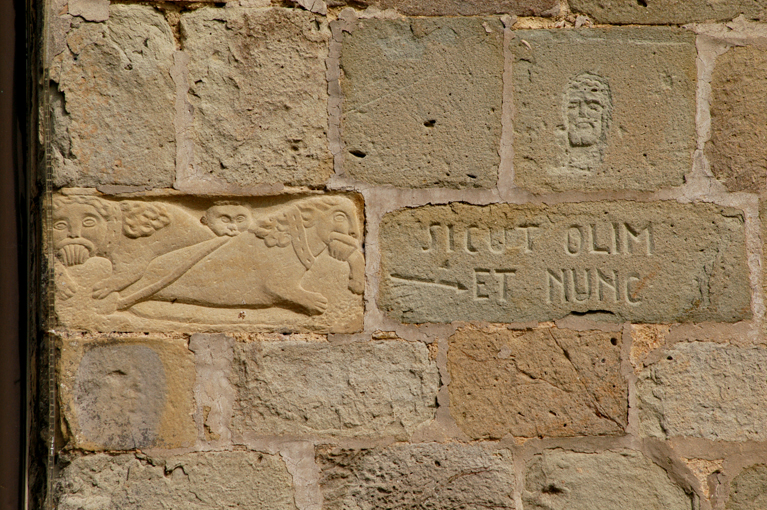
Sulla facciata in una pietra angolare compare un bassorilievo di esecuzione piuttosto recente (secolo XX) raffigurante due bestie addentate da una terza, in cui l’autore ha volutamente imitato un modello romanico, forse preesistente, come sembra indicare la scritta incisa a lato sicut olim et nunc (come un tempo anche ora). Pocosopra una piccola testa di uomo, che alcuni ipotizzano sia l’autoritratto dello scultore del bassorilievo.
Il paese di Coscogno, sviluppatosi in tempi relativamente recenti in località distante dalla pieve, è stato per molti decenni del secolo scorso luogo frequentato dai villeggianti della pianura, che qui salivano per godere l’aria salubre e fresca fermandosi nel locale albergo.
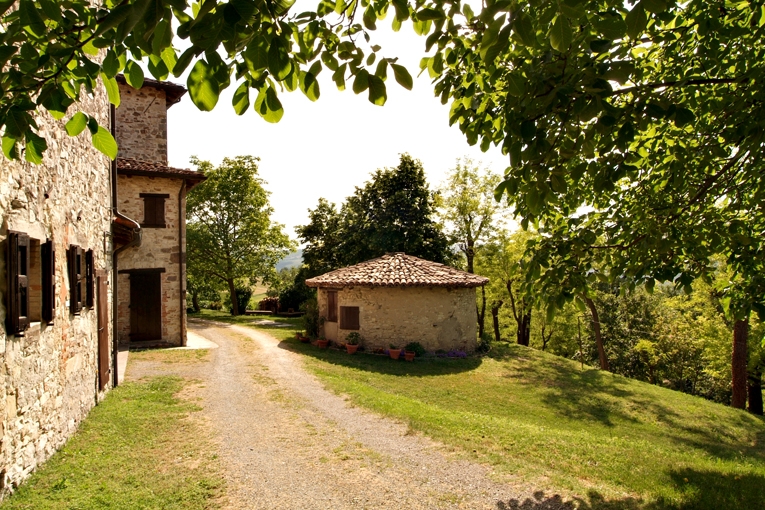
Poco distante dalla pieve di Coscogno l’antico borgo delle case Bazzani. Completamente restaurato dalla famiglia Panini, presenta uno dei capolavori dell’arte scultorea frignanese: il portale finemente scolpito nel 1516 da mastro Antonio d’Ambrosino, con raffinati fregi e al centro dell’architrave lo stemma dei Contrari di Vignola, cui la comunità di Coscogno era infeudata.
Un altro portale rinascimentale dello stesso scultore mastro Antonio con simili motivi decorativi si trova in località Le Coste. Nei pressi si incontra la località Ca’ di Minello dove è possibile osservare un antico edificio con una curiosa bifora e un significativo muro a scarpa.
English version
Along the Pavullo-Vignola road, isolated, far from residential zones, as was the rule of the position of medieval parish churches, you come across the parish church of Coscogno.
The fact that it is dedicated to the Ravenna’s bishop Saint Apollinare testifies to the antiquity of its original construction, which could date back to the Byzantine times: moreover the hamlet is mentioned in the most ancient Frignano’s documents from the early Middle Ages. The countess Matilde di Canossa stayed here in 1104.
The current external and internal appearance is the result of heavy renovation works, in particular the one undergone in 1648, when the two lateral wings were added to the original gabled façade and the three-part window was opened above the portal, above which a plaque commemorates the work carried out.
The façade’s most valuable element is the doorway made up of three distinct parts: the late Romanesque splayed external doorway made up of small columns and pilaster; the internal doorway with convex corbels inserted in a later period (14th century) to consolidate the structure and, finally, the lunette (13th century) which, during its forced adaptation to the portal’s structural changes, suffered a mutilation in the upper part.
The bas relief sculpted in it, rediscovered in 1920 under a 17th century plastering, has an iconographic motif which in different forms recalls the symbolism of the friezes of the apse of Monteobizzo and that is the fight between good and evil, which is resolved with the victory of Christ over evil and death.
In the lunette of Coscogno appear two goats and two monsters depicting evil and in the centre a palm tree a reference in Christian symbolism to the Resurrection and the redeeming action of Christ.
On the facade in a corner stone appears a bas relief of rather recent execution (20th century) depicting two beasts bitten by a third, in which the author has intentionally imitated a Romanesque model, perhaps pre-existing, as seems to indicate the writing engraved on the side sicut olim et nunc (as in the past even now). Just above there is a small head of a man, which some hypothesize is the self-portrait of the sculptor of the bas-relief.
The town of Coscogno, which developed relatively recently in a location far from the parish church, was for many decades of the last century a place frequented by holidaymakers from the plain, who came here to enjoy the healthy and fresh air by stopping in the local hotel.
Not far from parish church of Coscogno there is the ancient hamlet of Bazzani houses. Completely restored by the Panini family, it presents one of the masterpieces of Fignano sculptural art: the portal finely sculpted in 1516 by master Antonio d’Ambrosino, with refined friezes and in the centre of the architrave the coat of arms of the Contrari di Vignola, to whom the community of Conscogno was a fief.
Another Renaissance portal by the same master sculptor Antonio with similar decorative motifs is found in Le Coste. Nearby we come across the locality Ca’ di Minello where it is possible to observe an ancient building with a curious double-arched window and a significant battered wall.