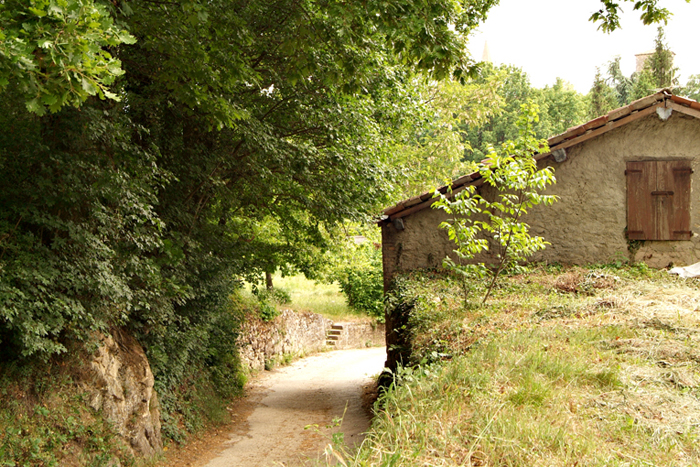
Una visita al paese di Montebonello equivale ad un viaggio con la macchina del tempo nella storia religiosa e politica di una comunità del Frignano tra Medioevo ed epoca moderna, tante e notevoli vi sono rimaste le tracce del passato.
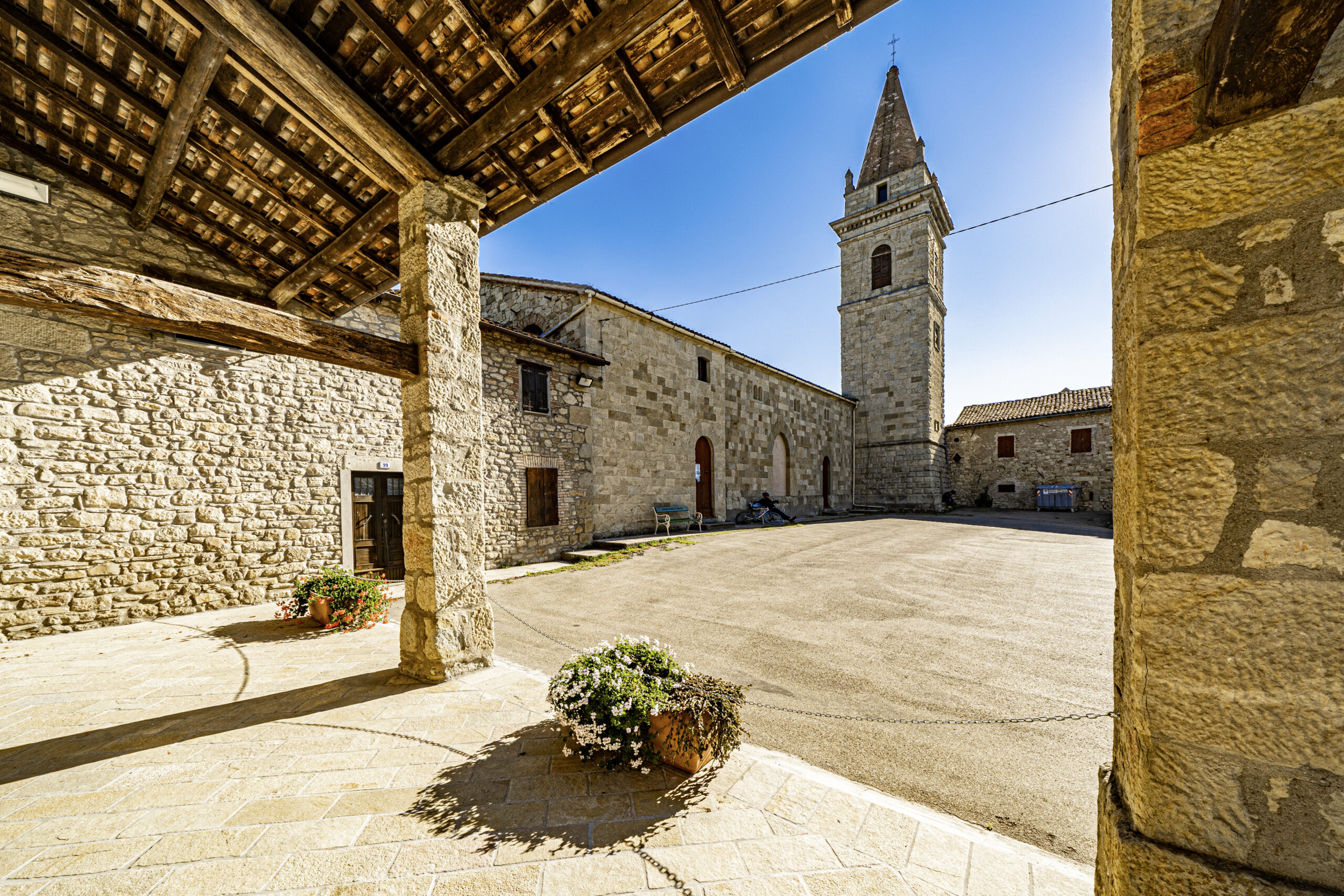
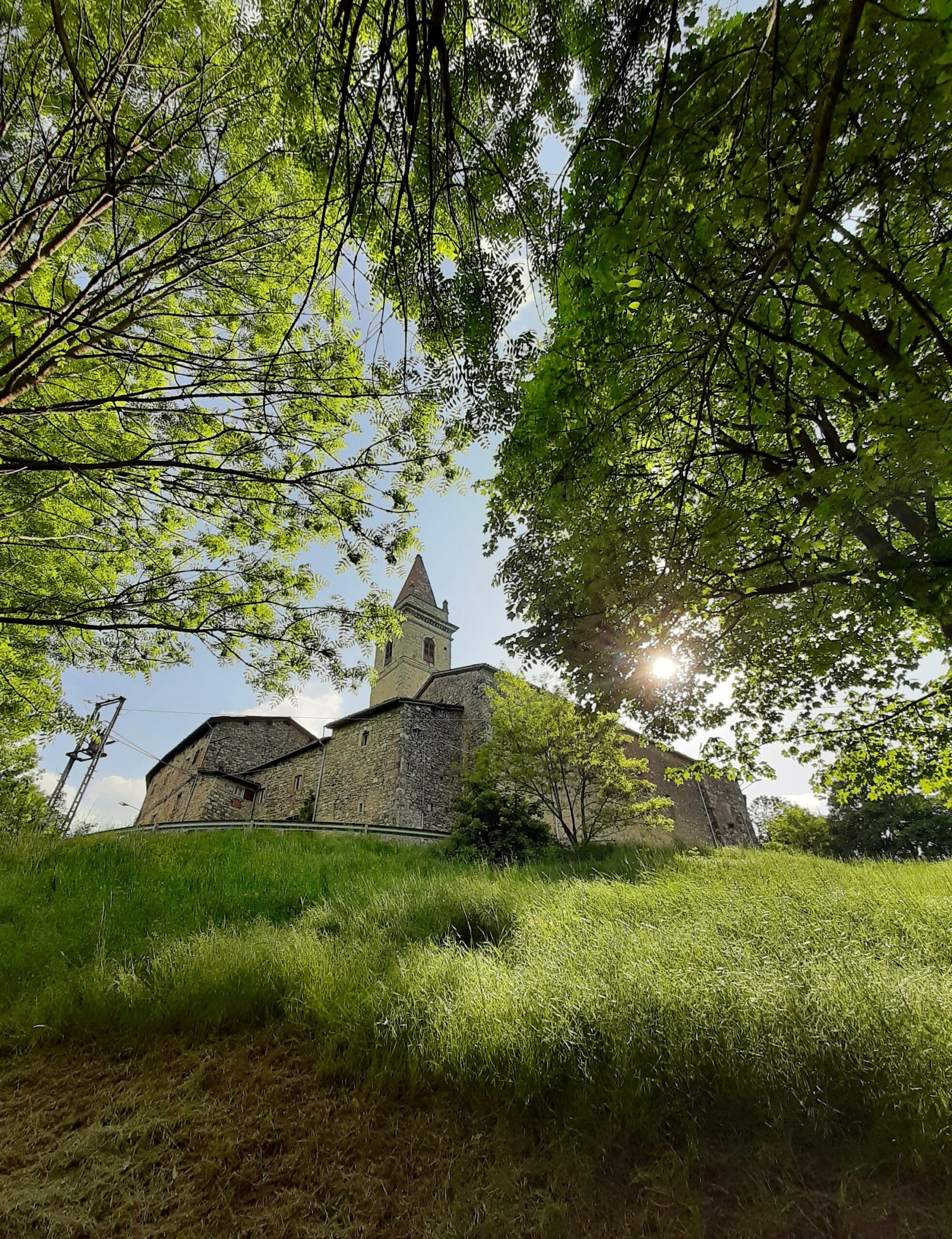
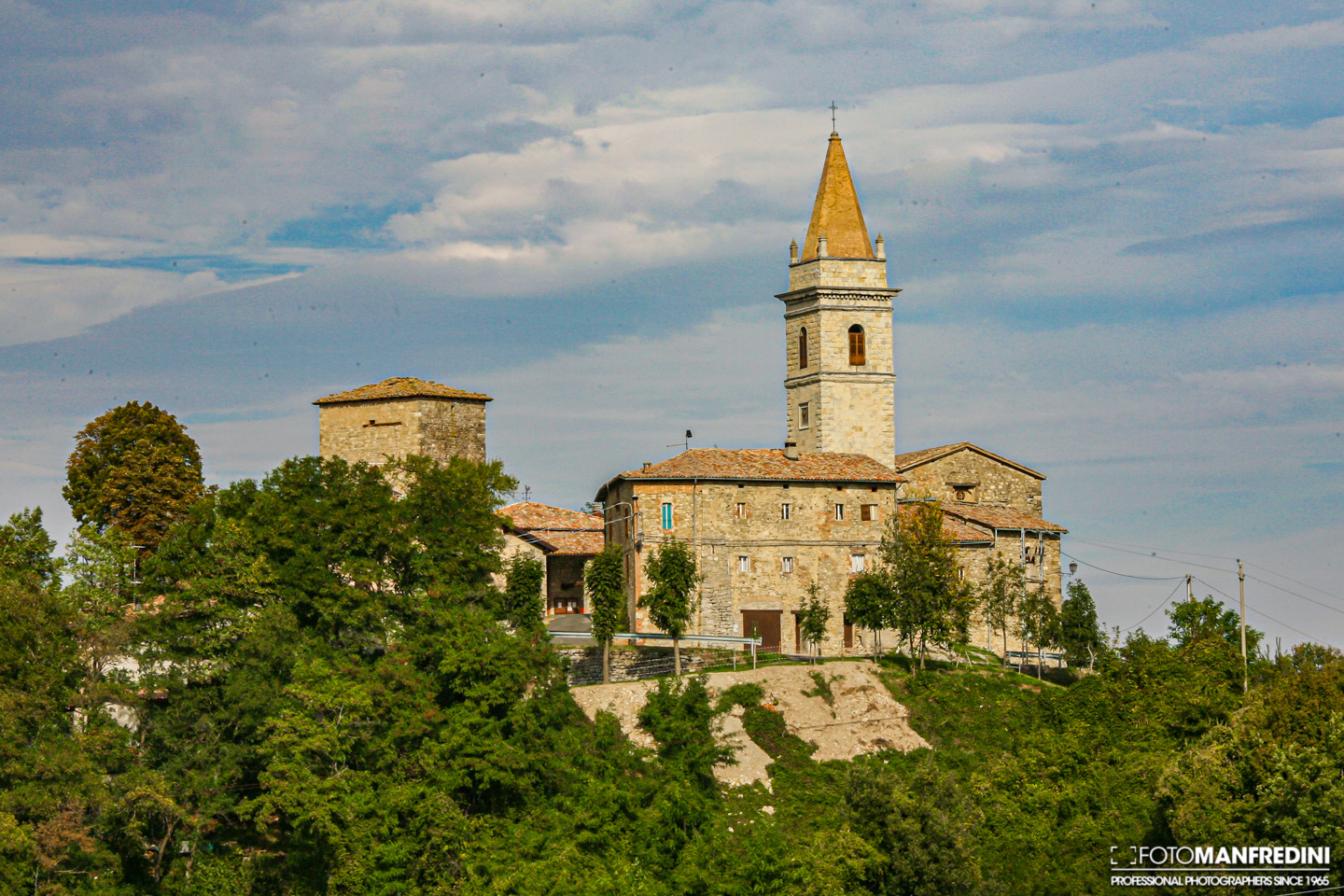
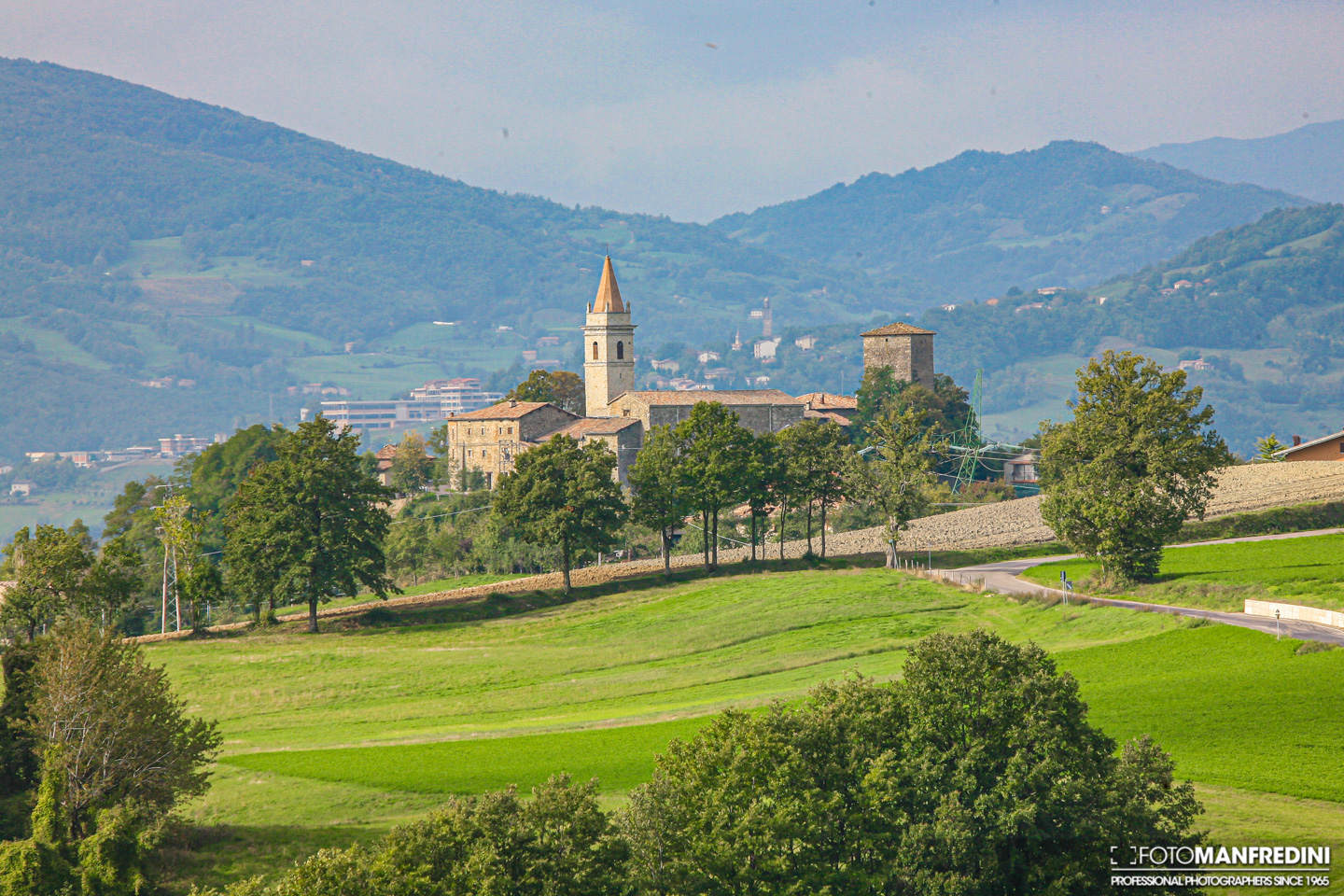
Posto su un colle nella dolce vallata dei torrenti Cogorno e Rossenna il paese di Montebonello è tutto racchiuso intorno alla piazza o trebbo ed ha mantenuto l’aspetto e la struttura delle sue origini medioevali.
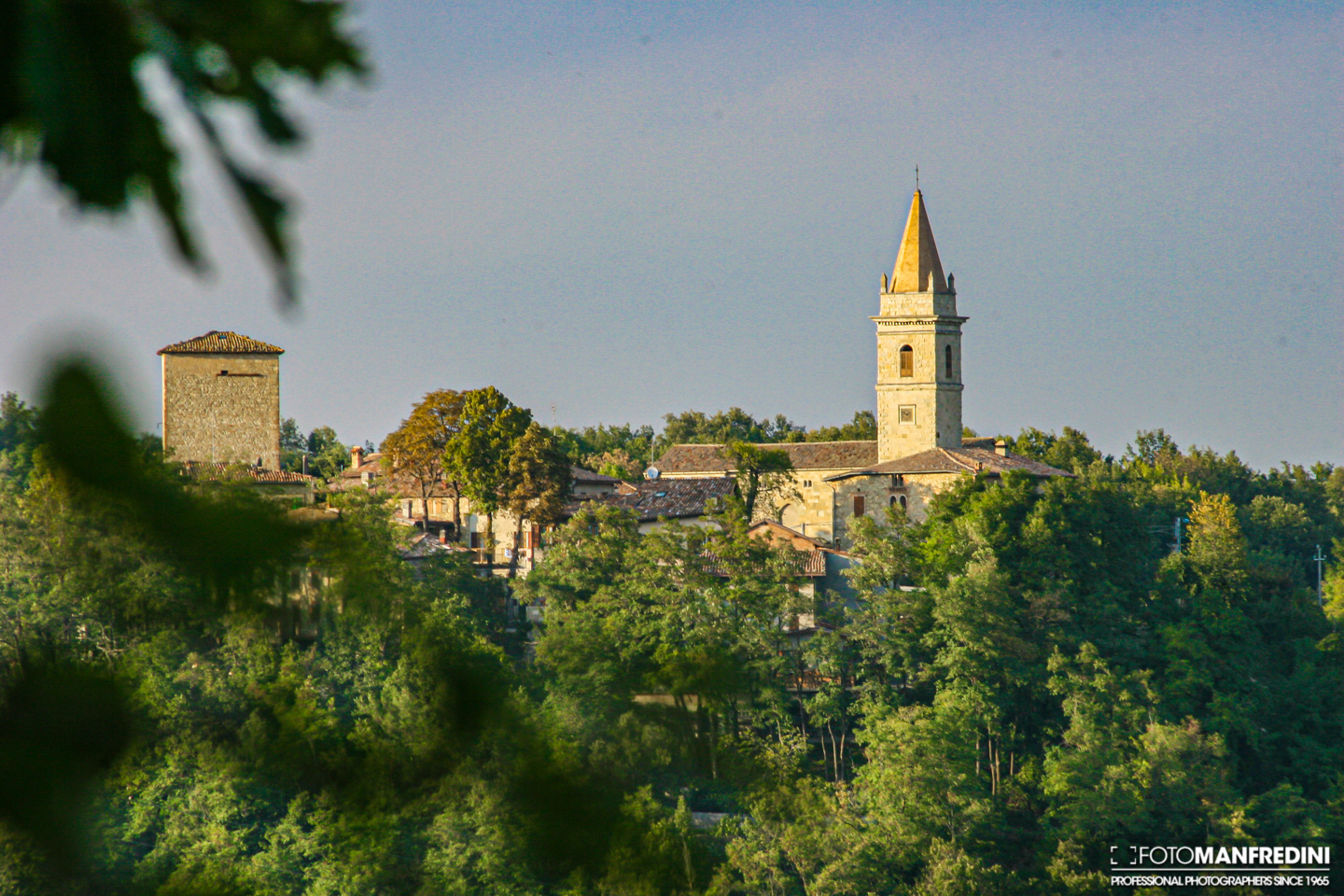
Sul lato più scosceso del colle, a guardia del borgo, si innalza la possente torre, costruita su uno sperone di roccia, esempio significativo e quasi integro di torre medievale, secondo una tipologia assai diffusa nel Frignano e nei territori matildici. Sul suo fianco occidentale si sono conservati due portali sopraelevati per l’ingresso al primo e al secondo piano. Sul fianco a nord sporgono le mensole in pietra di una caditoia ora scomparsa.
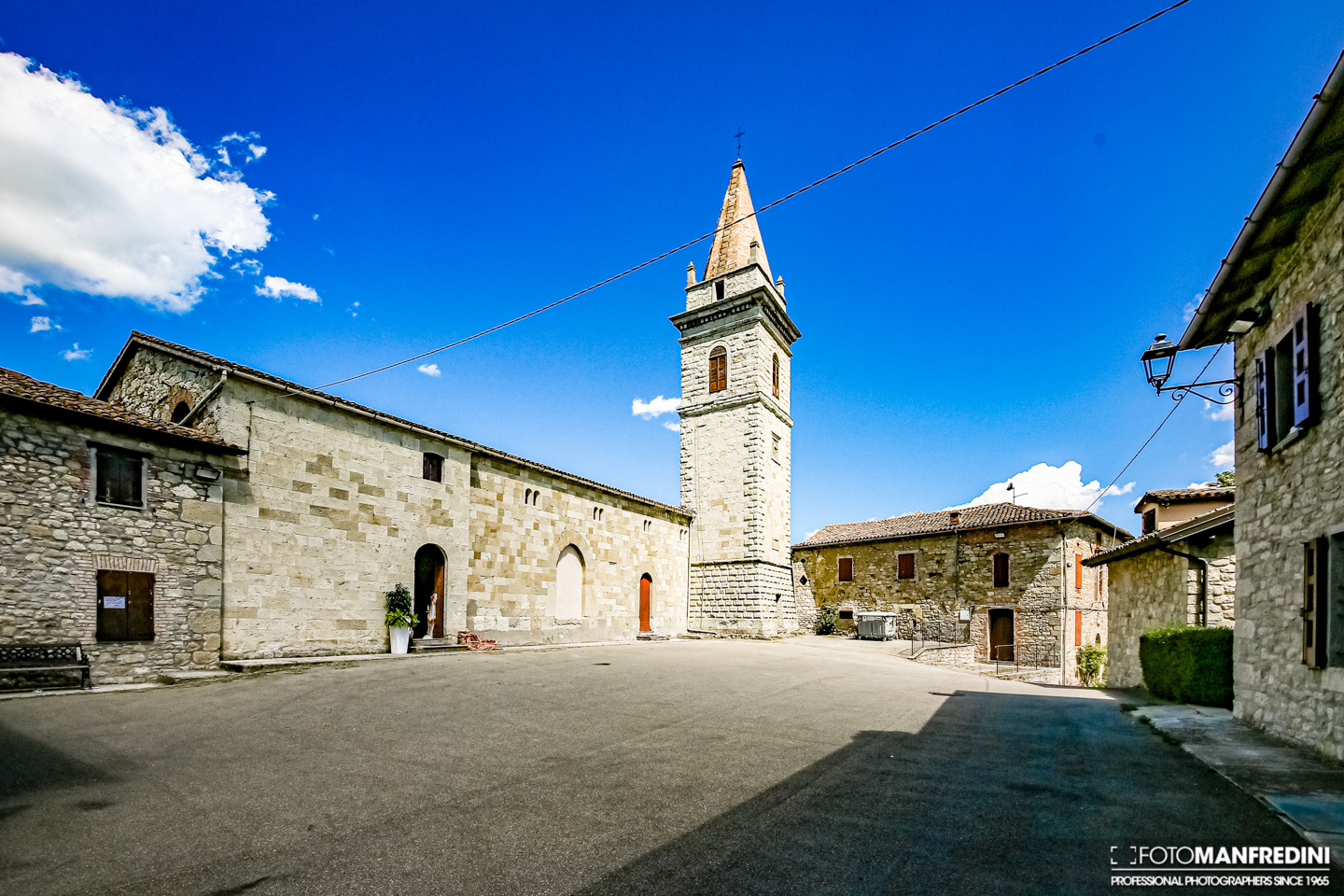
La chiesa, posta trasversalmente ai bordi della piazza a costituire quasi una cortina muraria, pur mancando di una facciata e di un ingresso ad occidente,eliminati entrambi nella ristrutturazione del 1910-1913, è orientata secondo gli antichi canoni liturgici con l’altare maggiore rivolto verso oriente. Sul bellissimo lato meridionale perfettamente costruito secondo la tecnica dell’opus quadratum sono posti i portali d’ingresso: uno angusto di stile romanico con arco a tutto sesto, l’altro gotico chiuso in tempi recenti e il terzo aperto all’epoca dell’allungamento della chiesa (1910 1913).
Sull’arco del portale centrale è scolpita la data 1446, cui risale forse la sua apertura. Nella parte superiore quattro bifore, ottenute da altrettanti monoliti, danno luce all’interno. La facciata è ornata da una formella scolpita, ora completamente corrosa, e da una piccola meridiana.
Entrando per lo stretto portale romanico a destra non sfugga il simbolo scolpito nel sottarco: uno splendido Nodo di Salomone, che nel Medioevo si usava porre sulle soglie degli edifici religiosi a delimitare lo spazio profano, che si abbandonava, da quello sacro, in cui si entrava.
Il silenzio, la penombra, le immagini affrescate dell’interno, trasportano il visitatore lontano nel tempo a sperimentare un senso del sacro ormai inusuale e a rivivere atmosfere di religiosità e di devozione dei fedeli di un lontano passato.
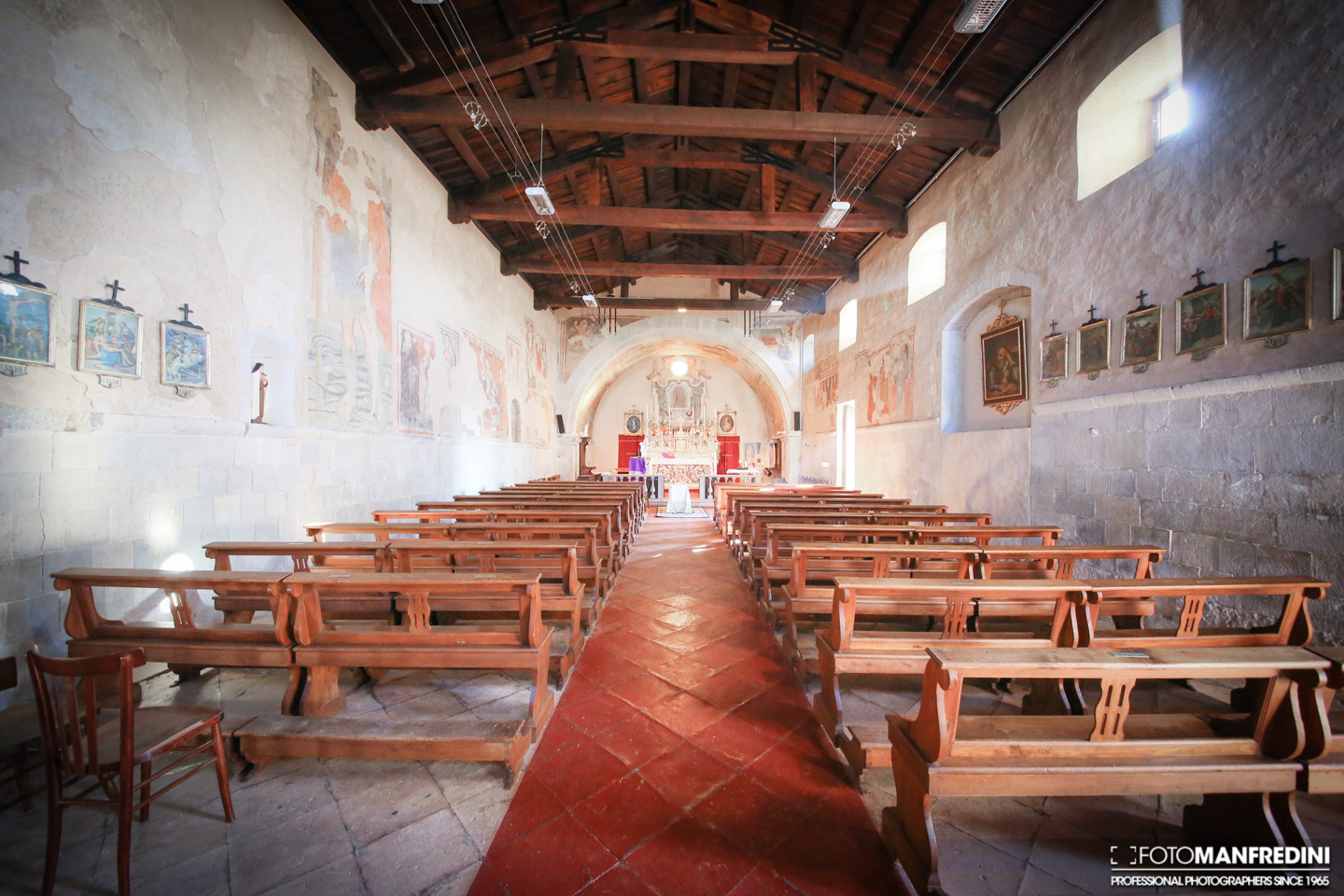
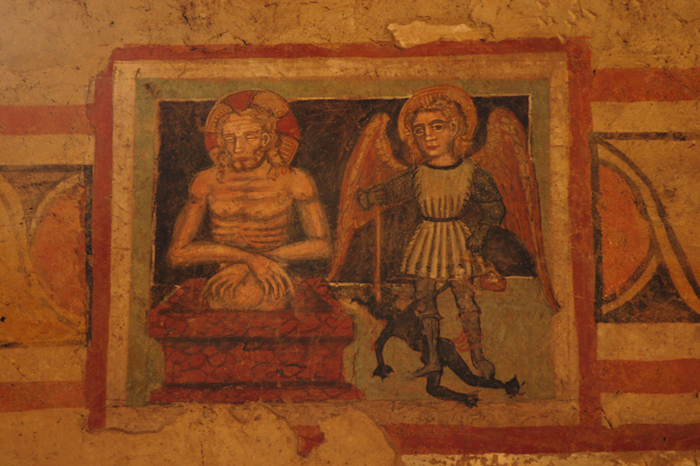
L’interno della chiesa di Montebonello, infatti, fortunatamente conservatosi quasi integro, è un esempio eccellente di organizzazione e disposizione delle immagini negli spazi di un edificio sacro del tardo Medioevo. Secondo tali moduli nello spazio interno delle chiese di quel periodo, che nel Frignano è possibile osservare nella sua interezza solo a Montebonello, le pareti laterali erano destinate ad ospitare le immagini dei santi più venerati in quei tempi, dispensatori di grazie e favori. Gli affreschi erano degli ex voto, disuguali per grandezza ed eseguiti in momenti e da autori diversi sulle pareti dove c’era posto e quindi all’apparenza in modo disordinato. Sul volto del presbiterio, invece, è presente un ciclo di affreschi realizzato, probabilmente da uno stesso autore, secondo un ordinato progetto, mirato a raffigurare in quattro grandi riquadri le storie dell’infanzia della Beata Vergine, essendo la chiesa dedicata alla Natività di Maria. La figura centrale è comunque Cristo Pantocratore, signore del mondo, con accanto i quattro evangelisti. Ai bordi del volto a destra e a sinistra le sante Lucia e Caterina d’Alessandria e in basso una fila di figure maschili, forse gli apostoli. Su una parete laterale del presbiterio era l’immagine della Beata Vergine, spostata nel Settecento al centro, sopra l’altare maggiore, perché ritenuta miracolosa. Sull’arco trionfale l’Annunciazione con la Vergine a destra e l’angelo a sinistra.
Altre opere di pregevole valore sono il paliotto di scagliola dell’altare maggiore (1704) e la tela, attribuita ad Ascanio Magnanini, con le immagini della Madonna e dei santi Pietro, Paolo e Antonio Abate, eseguita nel 1613 su commissione del parroco don Ercole Melchiorri, ritratto in basso a sinistra.
La località dei Baldaccini è nota per l’oratorio dedicato all’Assunzione di Maria. La sua origine risale alla metà del Cinquecento, ma un recente restauro ha completamente stravolto la struttura. All’interno si conservano un quadro raffigurante i santi Rocco e Sebastiano, invocati contro la peste, e un artistico paliotto sconsideratamente murato contro una parete. Il piccolo santuario fu costruito nel luogo in cui la terribile epidemia si fermò ai confini tra Montebonello e Coscogno. Per questo motivo ancora oggi la mattina della festa dell’Assunta i fedeli di quest’ultima comunità si recano in devota processione a rendere omaggio alla Vergine.
English version
A visit to the town of Montebonello is equivalent to a journey with a time machine into the religious and political history of a Frignano community between the Middle Ages and the modern era, many remarkable traces of the past have remained there.
Located on a hill in the gentle valley of the Cogorno and Rossenna streams, the town of Montebonello is entirely enclosed around the square or trebbo and has preserved the appearance and structure of its medieval origins.
On the steepest side of the hill, guarding the hamlet, stands the mighty tower, built on a spur of rock, a significant and almost intact example of a medieval tower, according to a very widespread typology in Frignano and in the Matildic territories. On its western side two raised portals have been preserved for the entrance to the first and second floors. On the north side the stone shelves of a now disappeared drain protrude.
The church placed transversely at the edges of the square to almost constitute a curtain wall, despite missing a facade and an entrance to the west, both of which were removed in the 1910-1913 reconstruction, is oriented according to the ancient liturgical canons with the main altar facing east.
On the beautiful southern side, perfectly built according to the opus quadratum technique, are the entrance portals: one is narrow and in Romanesque style with a round arch, the other is Gothic and was closed in recent times and the third was opened at the time of the church’s prolongation (1910 – 1913).
On the arch of the central portal is carved the date 1446, which perhaps dates back to its opening. In the upper part four double-arched windows, obtained from as many monoliths, give light to the interior. The facade is adorned with a sculpted tile, now completely corroded, and a small sundial.
Entering through the narrow Romanesque portal on the right, you cannot miss the symbol carved in the arch: a splendid Nodo di Salomone, which in the Middle Ages was used to place on the thresholds of religious buildings to delimit the profane space, that was abandoned for the sacred one which was entered.
The silence, the dim light, the frescoed images of the interior, carry the visitor far back in time to experience a now unusual sense of the sacred and to relieve atmospheres of religiosity and devotion of the faithful of a distant time.
The interior of the Montebonello church, in fact, fortunately preserved almost intact, is an excellent example of organization and arrangement of images in the spaces of sacred buildings from the late Middle Ages. According to these modules in the internal space of the churches of that time, which in the Frignano it is possible to observe in its entirety only in Montebonello, the side walls were intended to house the images of the most venerated saints in those times, dispensers of graces and favors.
The frescoes were votive offerings, uneven in size and painted in different moments and by different authors on the walls where there was room and therefore apparently in a messy manner. On the façade of the presbytery, instead, there is a cycle of frescoes painted, probably by the same author, according to an orderly project, aimed at depicting the stories of the childhood of the Blessed Virgin in four large frames, being the church dedicated to the Nativity of Mary. The central figure, however, is Christ Pantocrator, lord of the world, with the four Evangelists next to him. At the edges of the front face on the right and left there are Saints Lucia and Caterina d’Alessandria and below a row of male figures, perhaps the Apostles. On a side wall of the presbytery there was the image of the Blessed Virgin, moved in the eighteenth century to the centre, above the main altar, because it was considered miraculous. On the triumphal arch is depicted the Annunciation with the Virgin on the right and the angel on the left.
Other works of fine value are the scagliola antependium of the main altar (1704) and the canvas, attributed to Ascanio Magnanini, with the images of the Madonna and the Saints Pietro, Paolo and Antonio Abate, painted in 1613 on commission from the parish priest Don Ercole Melchiorri, portrayed at the bottom left.
The locality of Baldaccini is known for the oratory dedicated to the Assumption of Mary. Its origins date back to the mid sixteenth century, but a recent restoration has completely changed the structure. Inside are preserved a painting depicting the saints Rocco and Sebastiano, invoked against the plague, and an artistic antependium thoughtlessly walled up against a wall.
The small sanctuary was built in the place where the terrible epidemic stopped on the border between Montebonello and Coscogno. For this reason, even today, on the morning of the feast of the Assumption the faithful of this latter community go in a devout procession to pay homage to the Virgin.