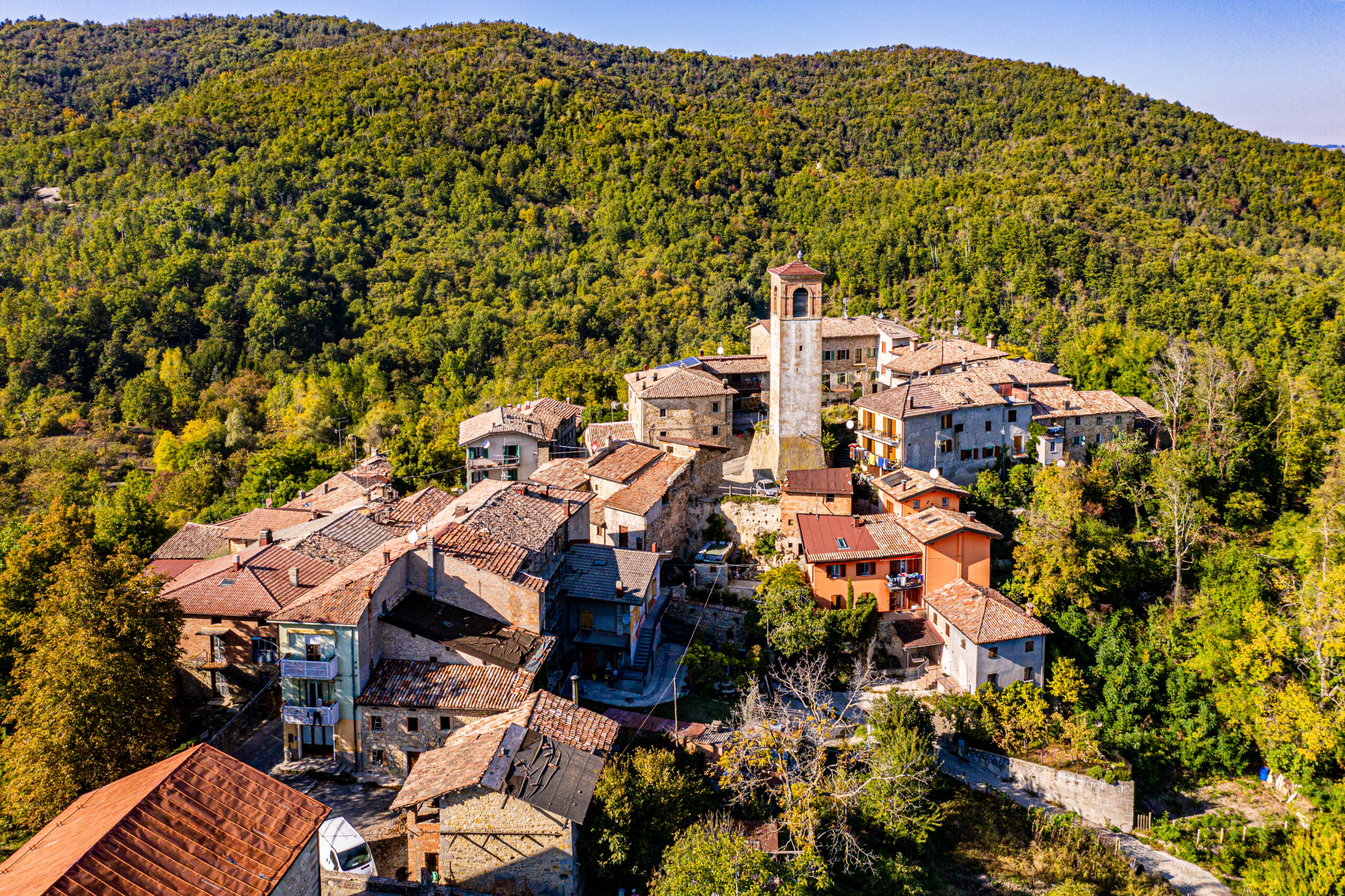
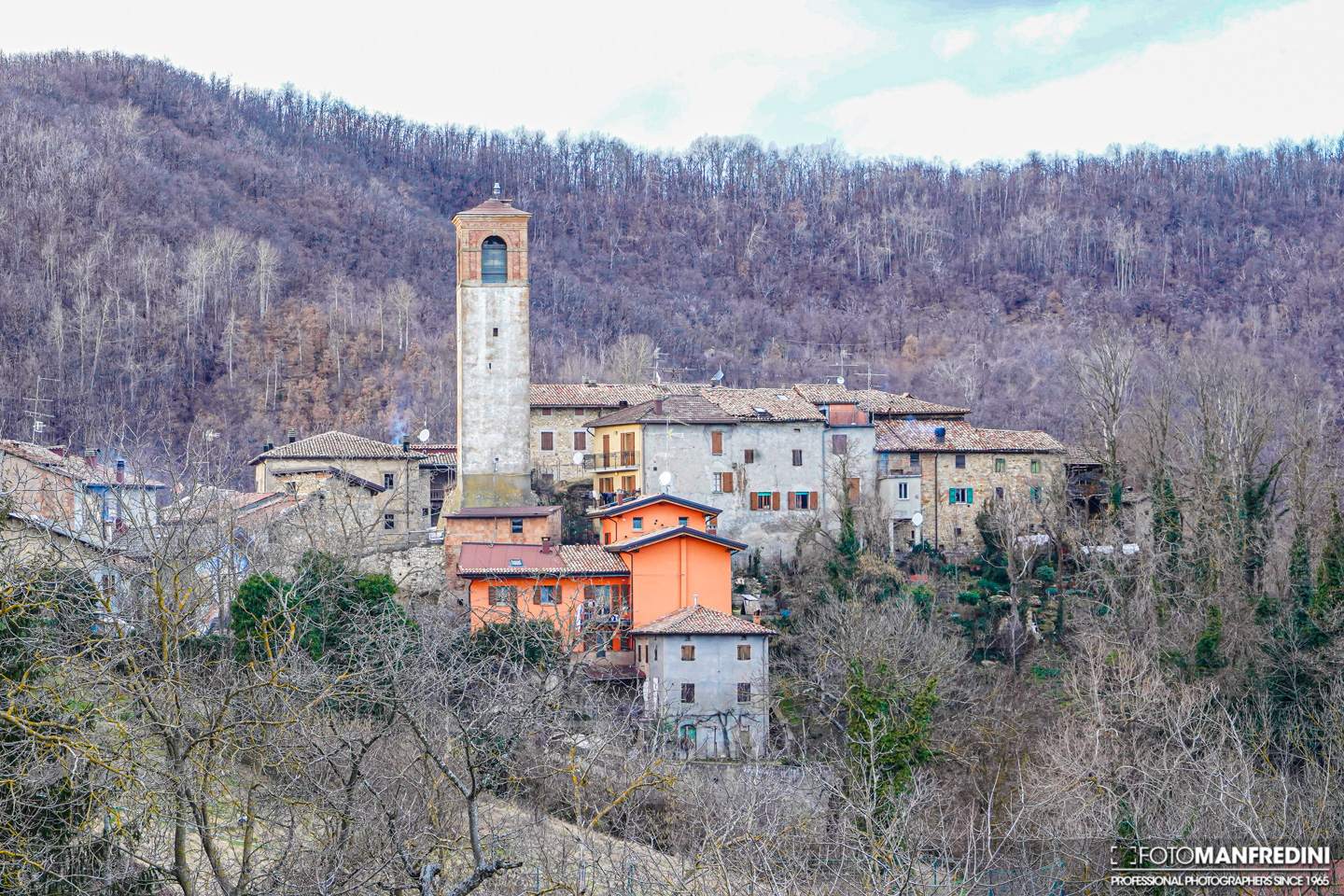
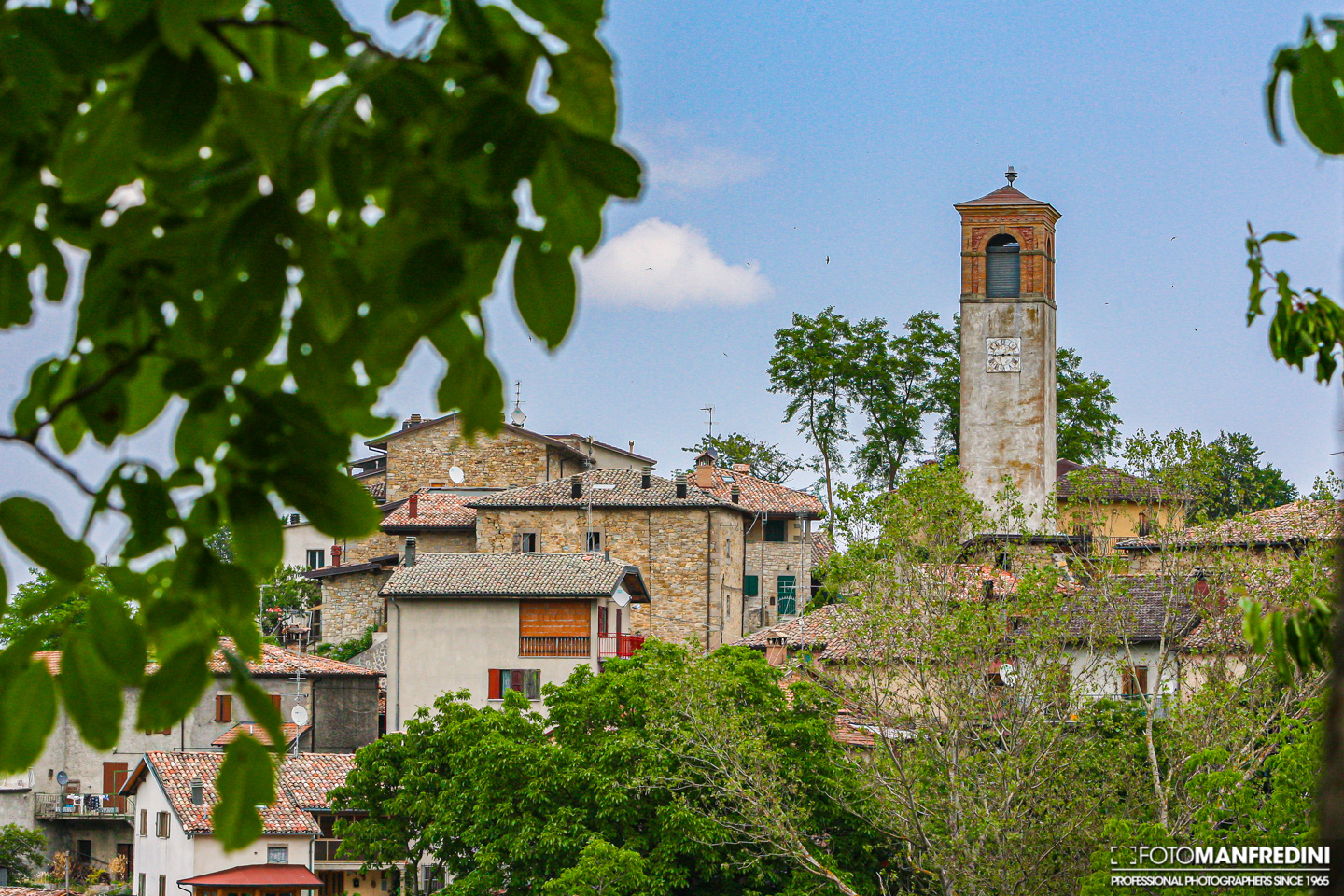
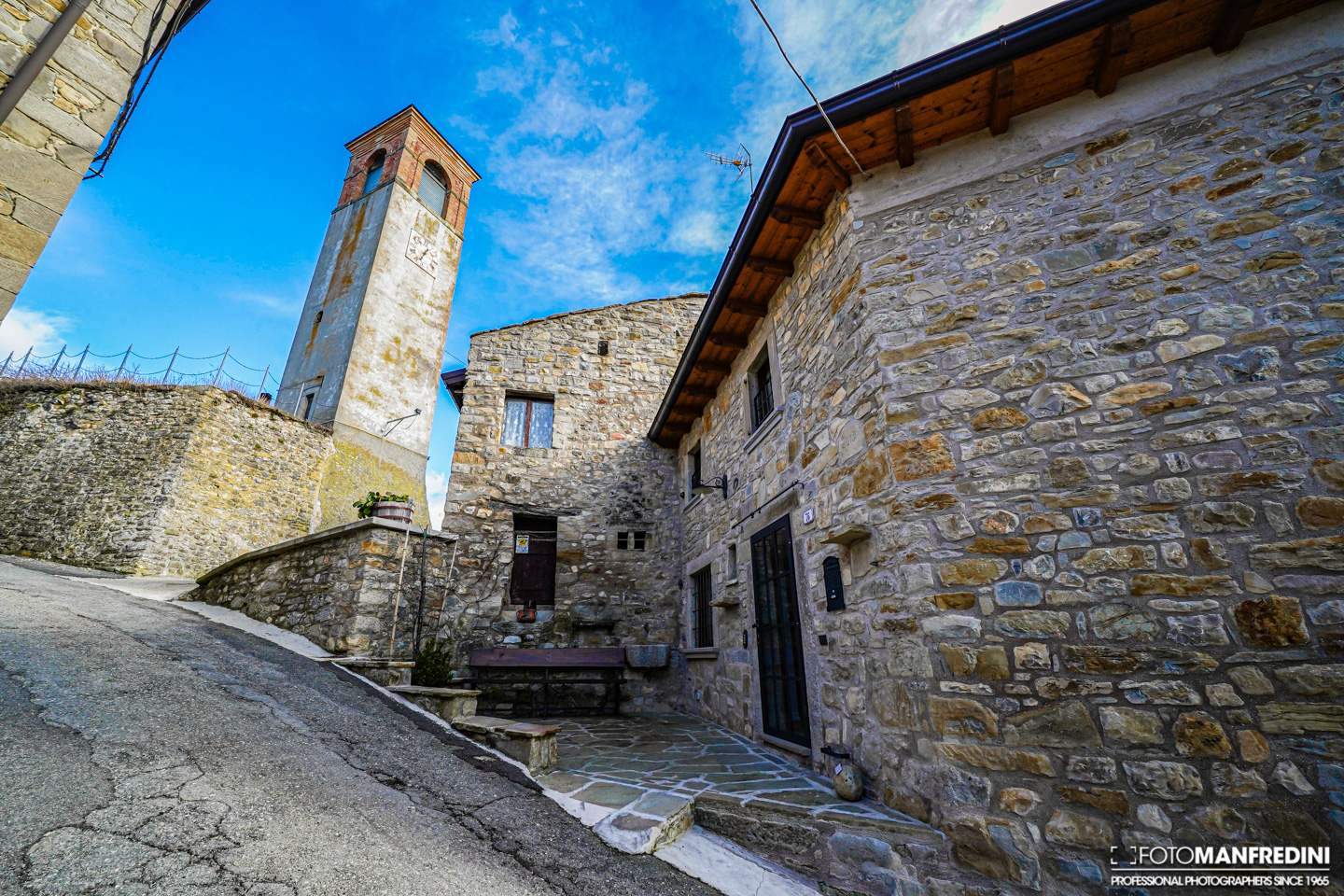
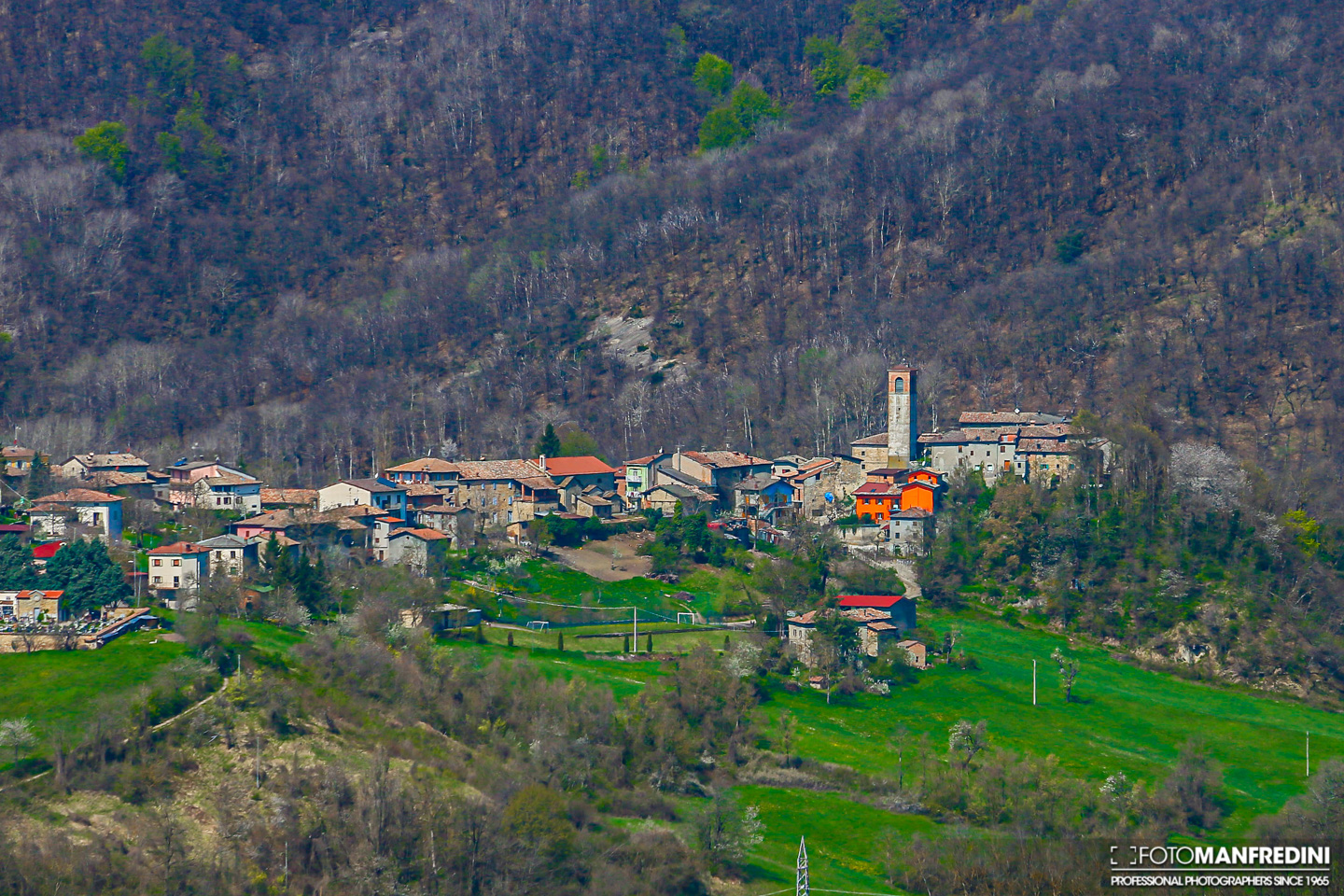
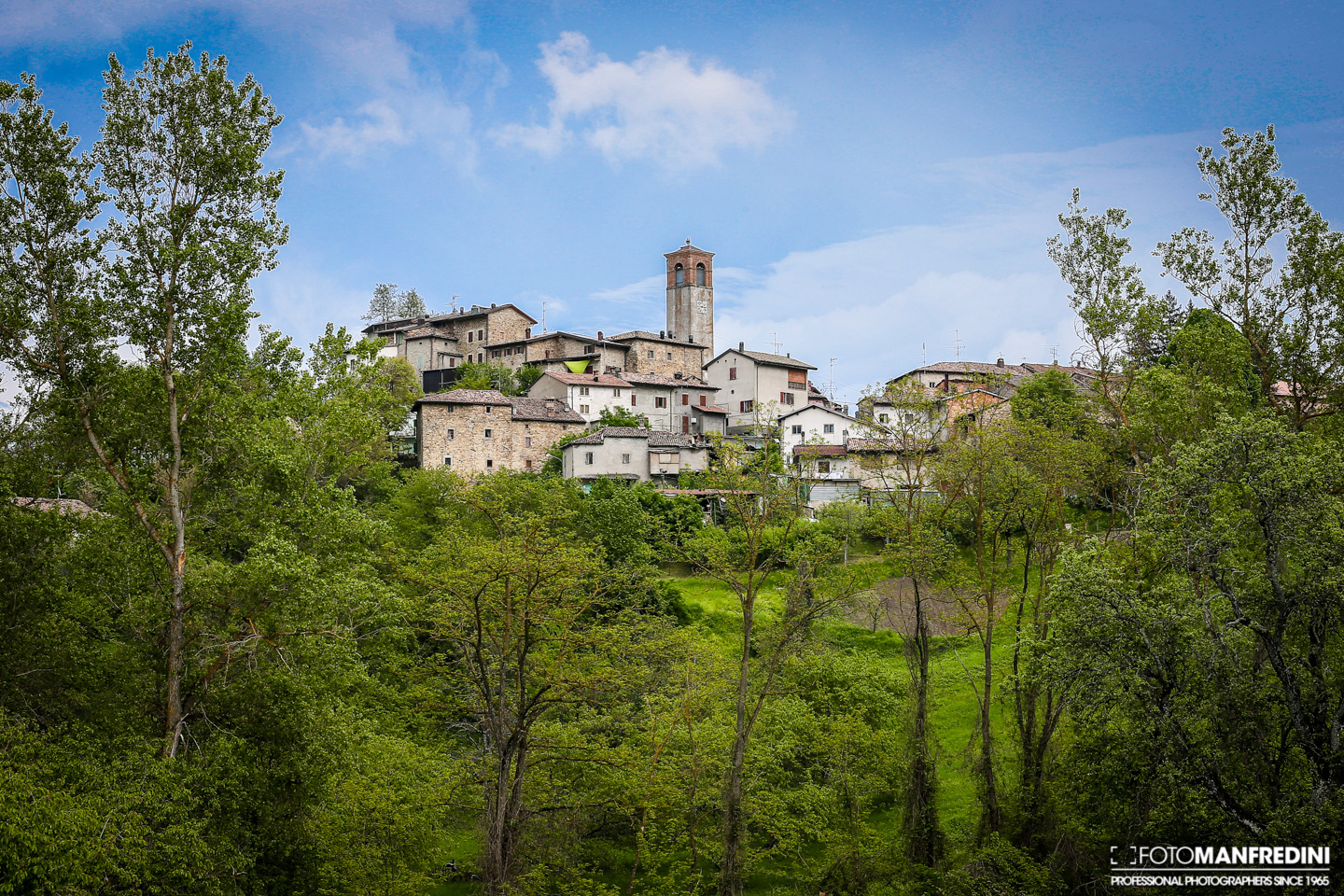
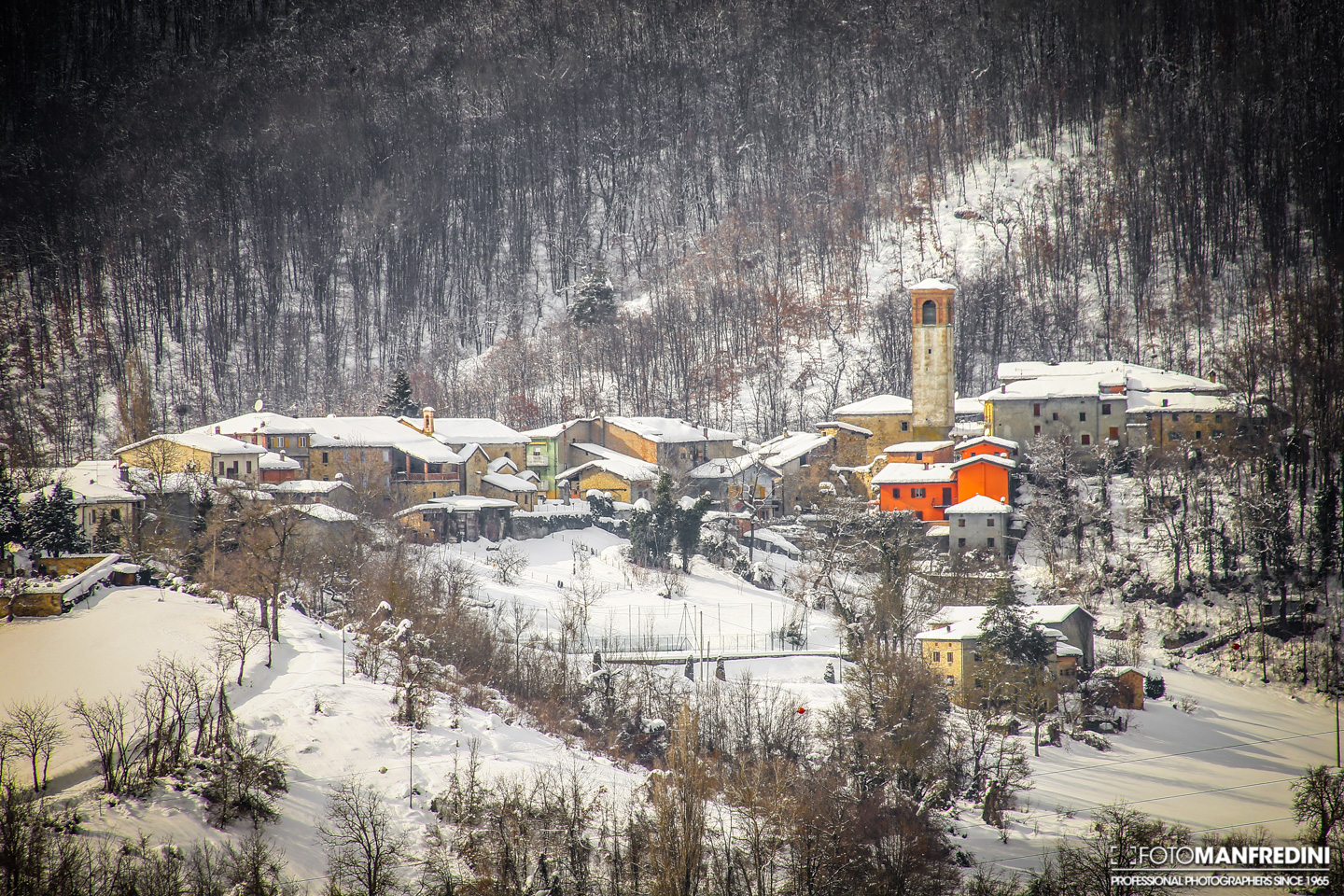
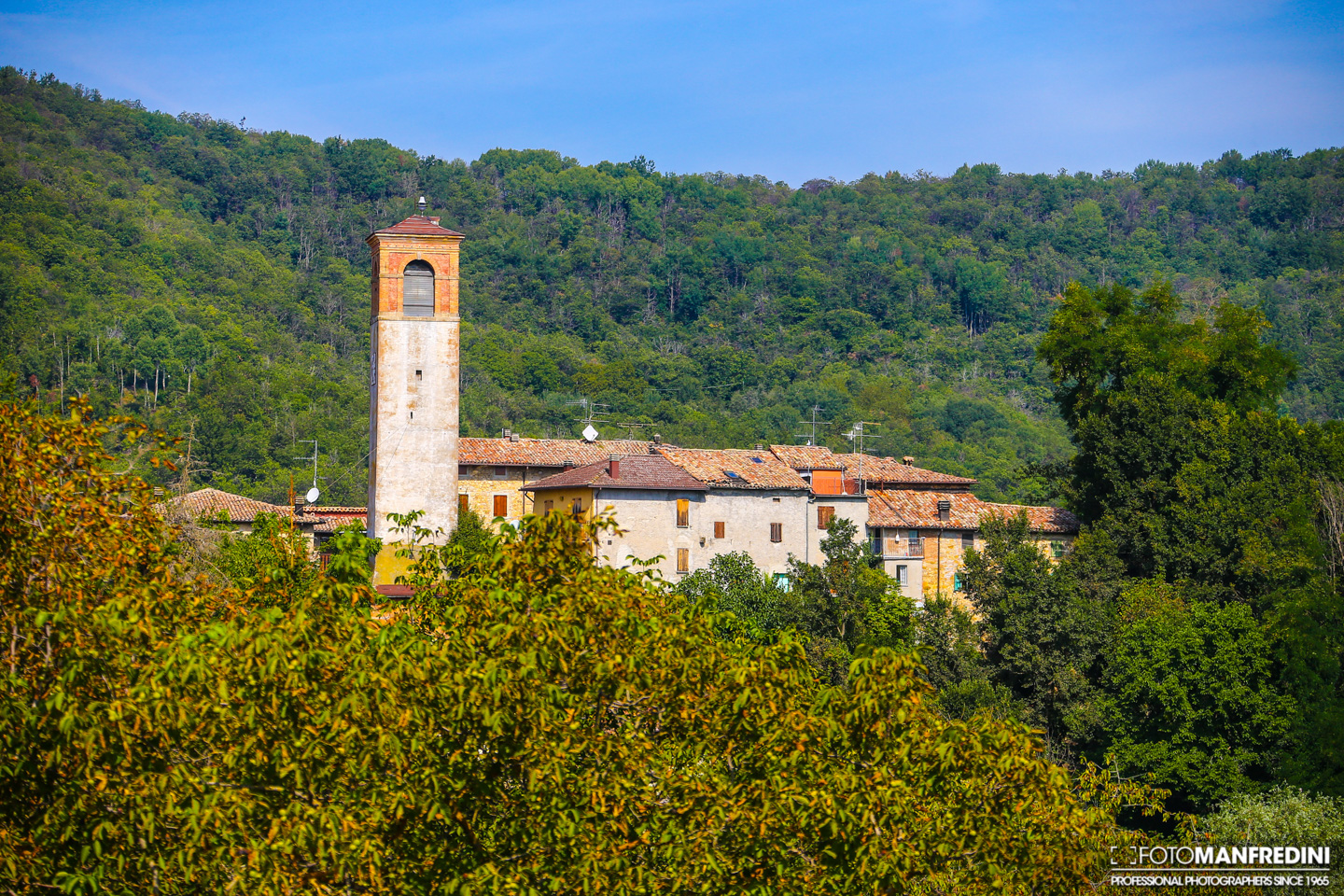
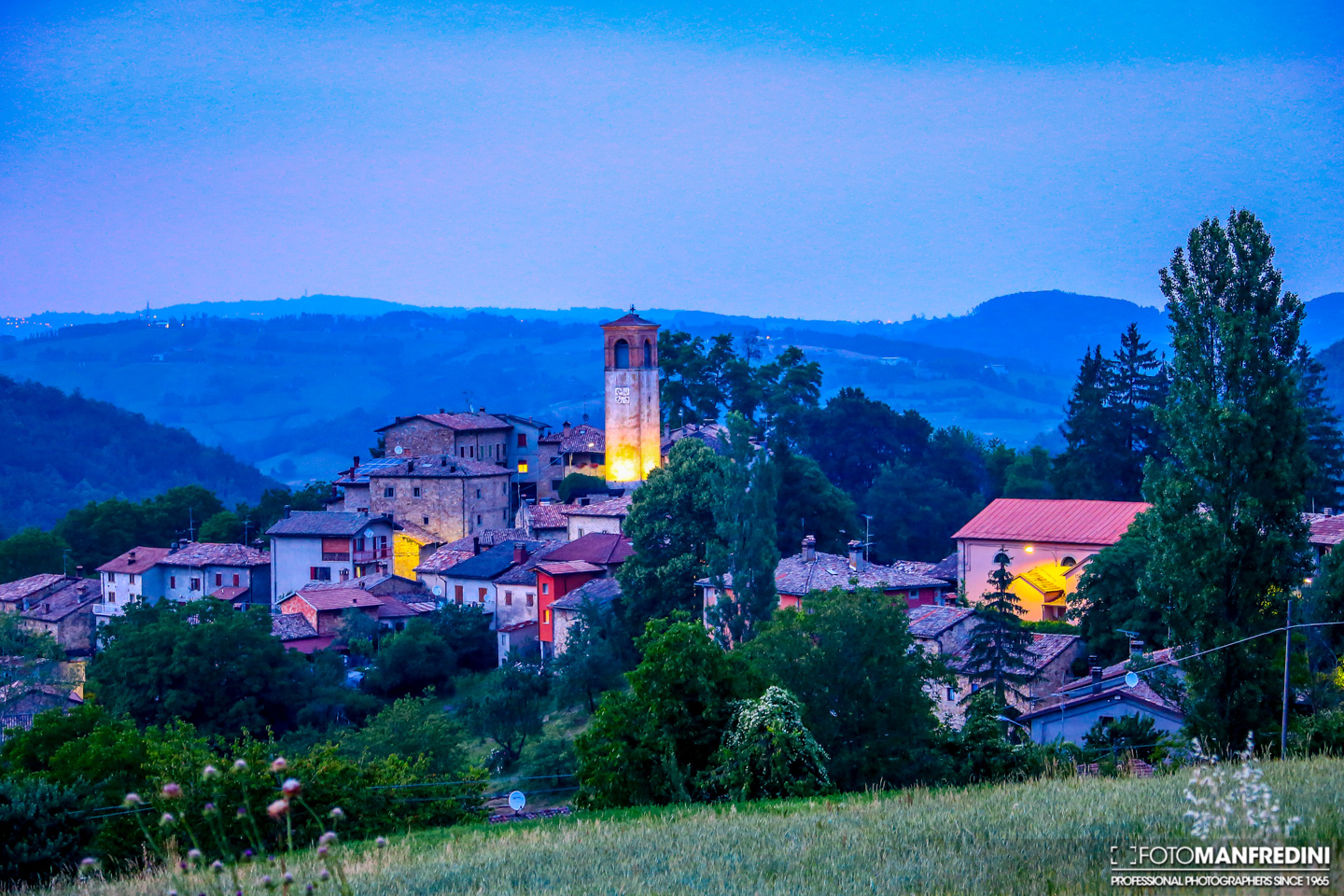
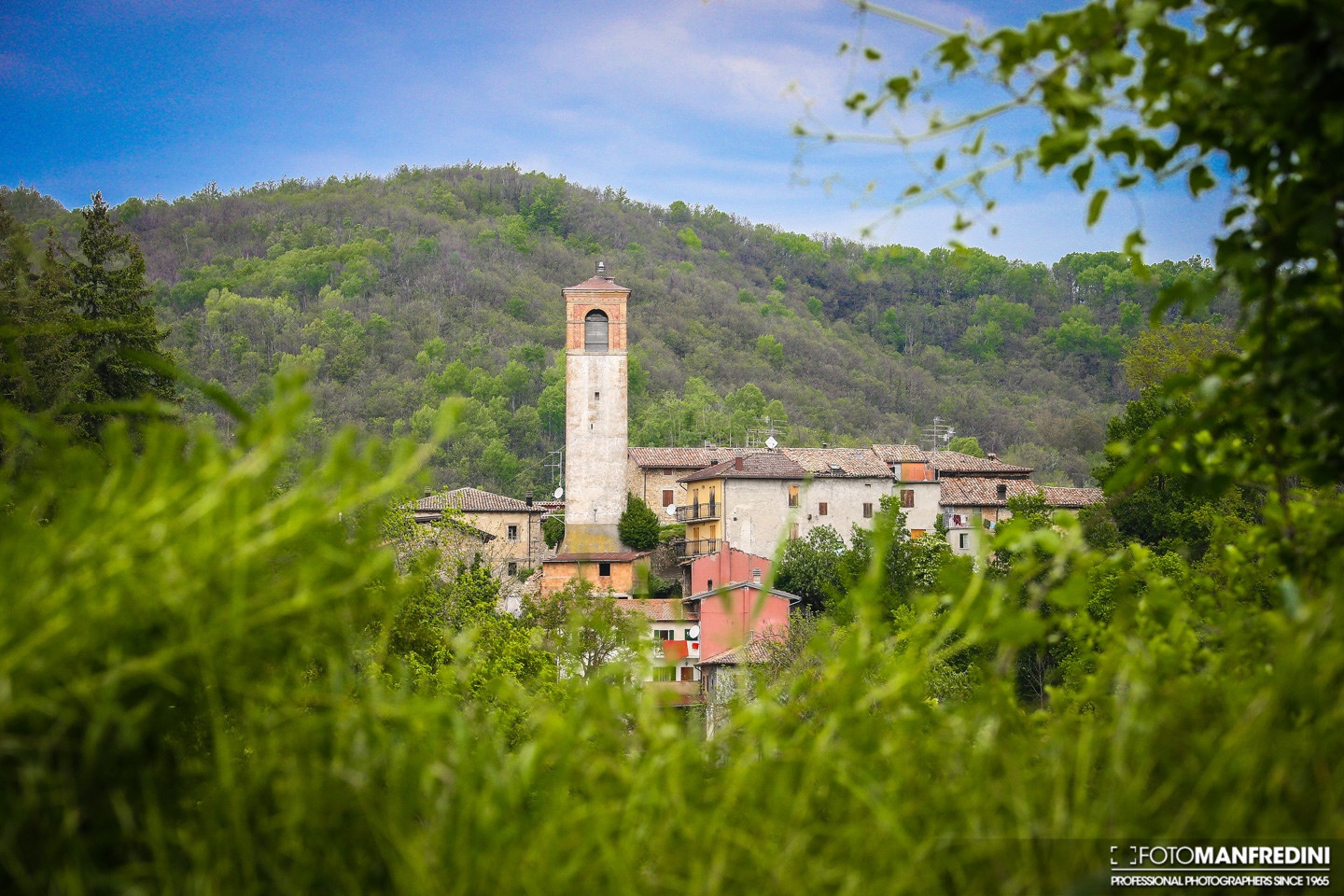
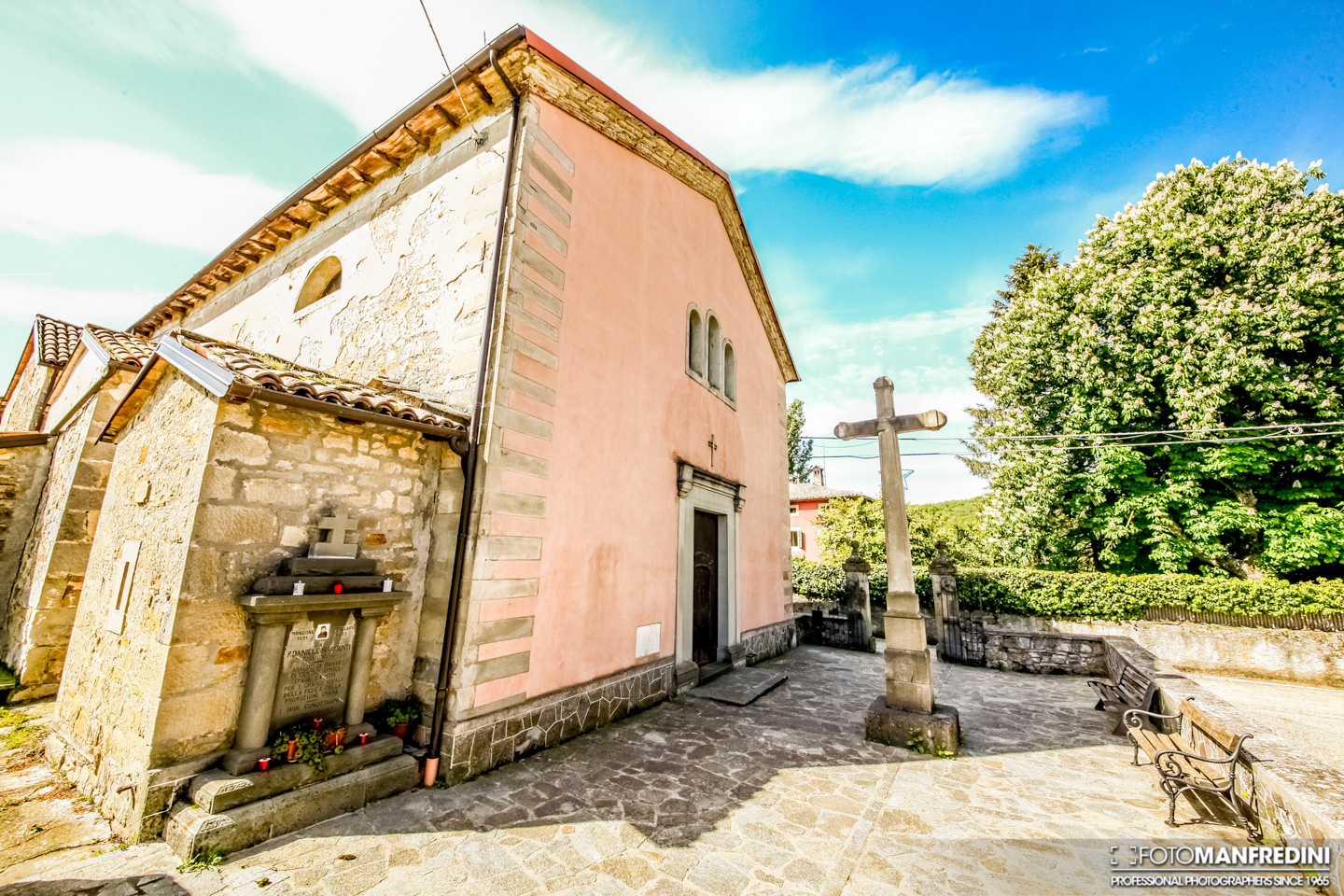
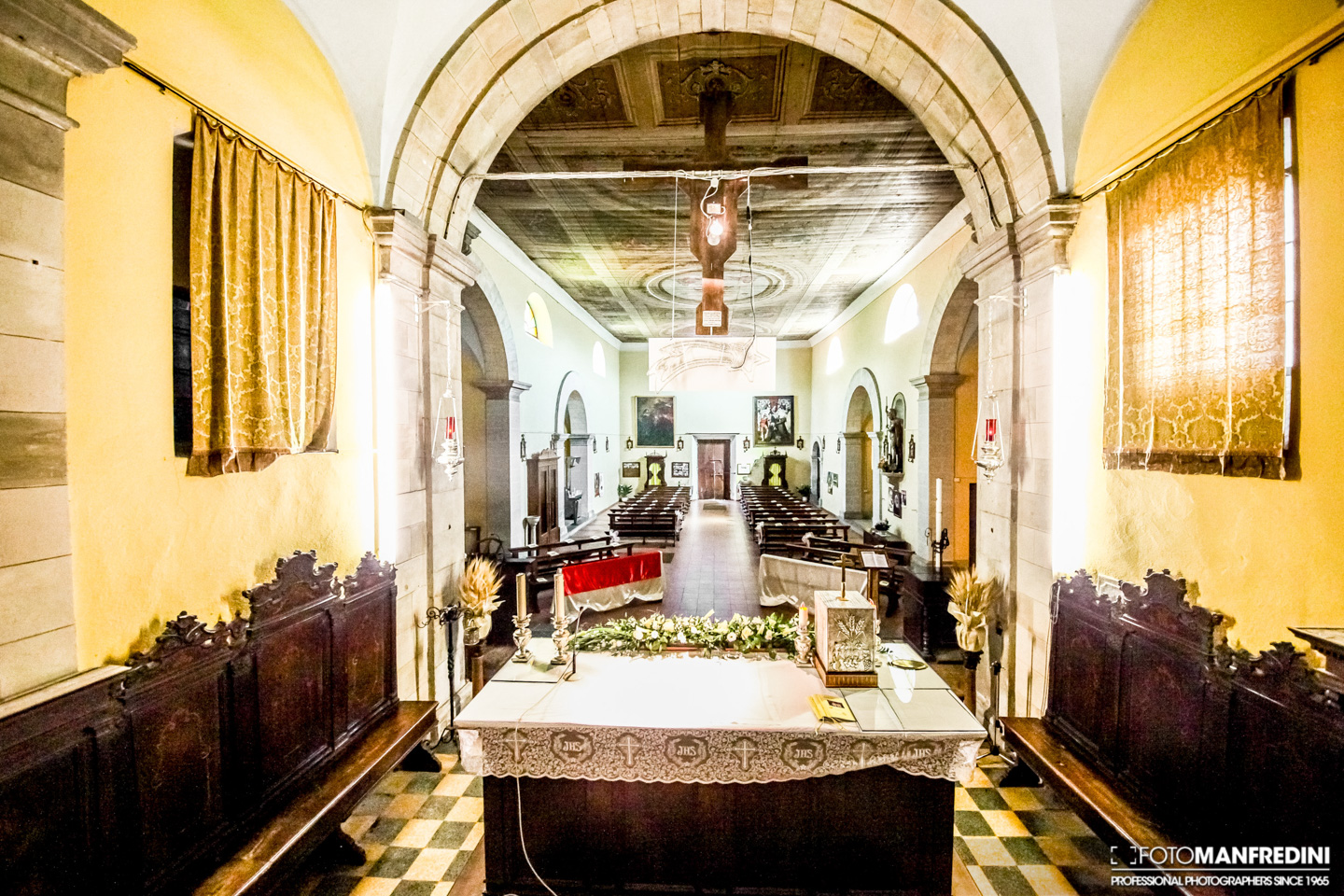
Nonostante la sua posizione isolata il borgo fortificato di Monzone godette nel Medioevo di una notevole importanza militare e fu più volte al centro delle lotte tra le parti che si contendevano il dominio sul Frignano. Raccolto ai piedi del castello, di cui rimane solo la torre ora adibita a campanile, il paese si caratterizza per le strette viuzze che si aprono improvvisamente in piccole piazze e cortili. La chiesa conserva sull’altare maggiore un’ancona in arenaria di pregevole fattura datata 1517, dove l’immagine di san Giorgio, protettore del paese, è contornata da una cornice in cui sono rappresentati animali, frutti e fiori tipici dell’Appennino. Nella parte inferiore due cherubini affrontati reggono il calice sopra la porticina del tabernacolo, ai cui lati sono due fori rotondi in cui i fedeli infilavano biglietti con le loro suppliche.
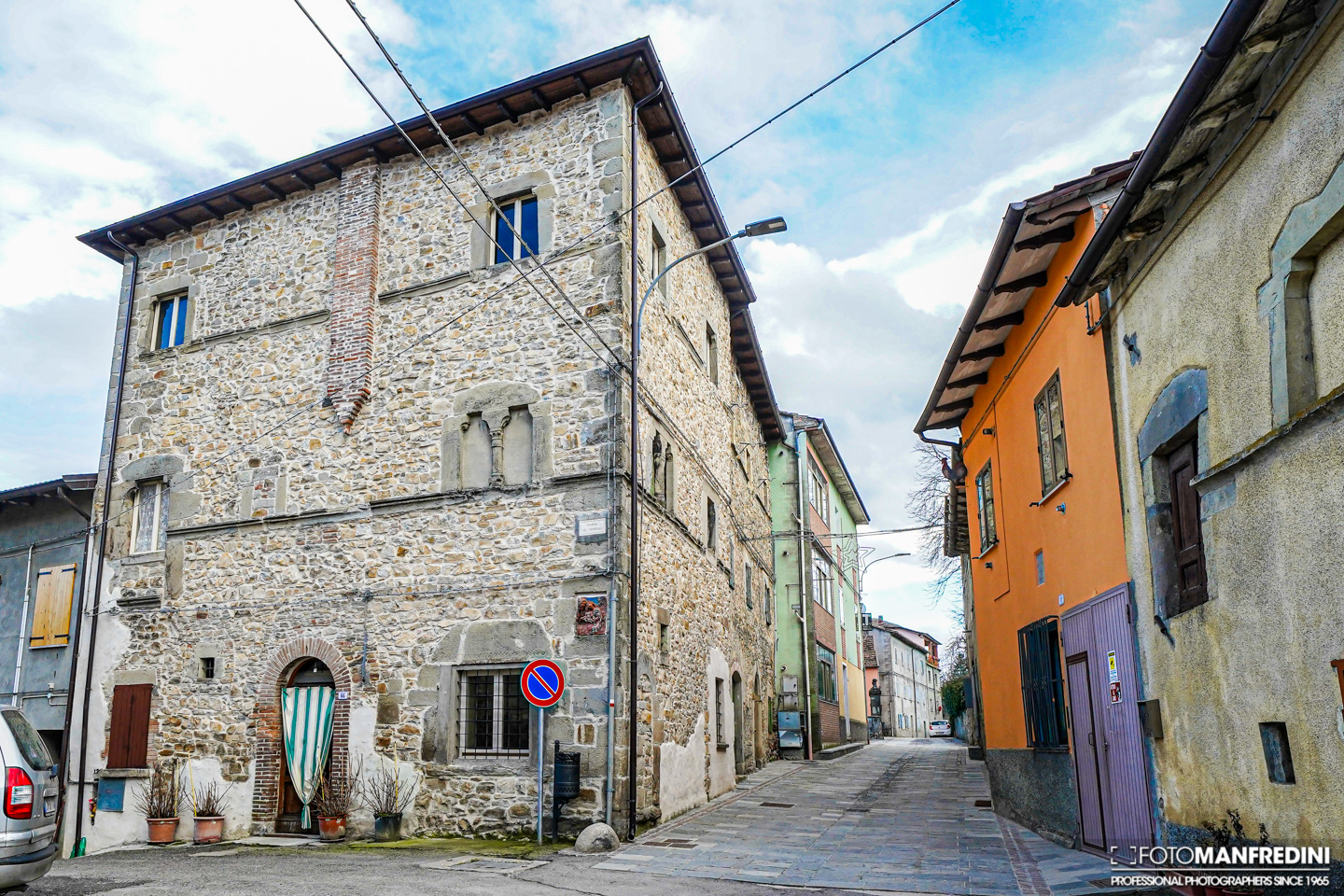
Al centro del paese si trova l’edificio trecentesco che fu per qualche tempo la sede del Consiglio del Comune Federale del Frignano e dove furono emanati gli Statuti del 1337-1342. Portali e finestre sono ornati da caratteristici simboli e stemmi.
Nei pressi di Monzone, poco distante dalla strada per il Ponte del Diavolo, si trova un complesso abitativo detto Casa Cipolla, interessante esempio di casa a corte chiusa. Sul cortile interno rettangolare, cui si accede attraverso uno stretto ingresso sul lato occidentale, sono disposti quasi a formare un muro di recinzione gli edifici dalle diverse tipologie e funzioni: la casa balchionata, la casa-torre, la dimora padronale. Ne fu proprietaria la famiglia notarile dei Macchia.
Altrettanto interessante il vicino complesso abitativo delle Ville di Monzone, in cui spicca una dimora signorile dall’elegante loggia in facciata. Era di proprietà della locale famiglia dei notai Bosi, che nel Seicento furono Governatori delle Podesterie di Montecenere e di Brandola.
Nei boschi di Monzone ai confini con il comune di Lama Mocogno si incontra un singolare ponte in arenaria, detto Ponte Ercole o del Diavolo, che è in realtà un monolite modellato a forma di ponte dall’erosione degli agenti atmosferici. Il sito, in età preromana e romana, dovette rivestire particolare importanza cultuale, come dimostra il ritrovamento di preziose monete e di altri oggetti, di cui i pellegrini facevano dono alle divinità o ai sacerdoti, che officiavano in questo antico luogo di culto e sulla vetta del vicino Monte Apollo. I toponimi Ercole e Apollo sono di origine recente e furono coniati in occasione dei ritrovamenti archeologici del secolo XVIII.
Il toponimo del Diavolo si riferisce invece ad una leggenda che narra come il Diavolo abbia costruito il ponte per un contadino in cambio della sua anima e ne sia, però, stato beffato. Il diavolo avrebbe lasciato una sua traccia nella pietra, una cavità rotondeggiante entro la quale non bisogna assolutamente introdurre la testa, se non si vuole correre il rischio di perderla.
English version
Despite its isolated position, during the Middle Ages, the fortified hamlet of Monzone enjoyed a significant military importance, and was several times at the centre of battles between the parties competing for dominion over Frignano. Gathered at the foot of the castle, of which only the tower now used as a bell tower remains, the town is characterised by narrow streets that suddenly open into small squares and courtyards. The church preserves on the main altar a high quality sandstone altarpiece dated 1517, where the image of Saint Giorgio, protector of the town, is surrounded by a frame in which animals, fruits and flowers typical of the Apennine are represented. In the lower part two cherubs facing each other hold the glass above the door of the tabernacle, on which sides are two round holes where the faithful inserted notes with their pleas.
In the centre of the town stands the 14th century building which was for some time the seat of the Council of the Federal Municipality of Frignano and where the Statutes of 1337 – 1342 were emanated. Doorways and windows are decorated with characteristic symbols and coats of arms.
Near Monzone, not far from the road to the Ponte del Diavolo (Devil’s Bridge), there is a housing complex called Casa Cipolla, an interesting example of a closed courtyard house. In the rectangular internal courtyard, accessible through a narrow entrance on the western side, the buildings of different types and functions are arranged almost to form a fencing wall: the balcony house, the tower house, the manor house. The notary Macchia family owned it.
Equally interesting is the nearby housing complex of the Ville di Monzone, in which a stately home with an elegant loggia on the facade stands out. It was owned by the local Bosi family of notaries, who in the 17th century were Governors of the Podesterie of Montecenere and Brandola.
In the woods of Monzone, on the border with the municipality of Lama Mocogno, there is a singular sandstone bridge, called Ponte Ercole or Ponte del Diavolo, which is actually a monolith modelled into the shape of a bridge by the erosion of atmospheric agents.
The site, in pre-Roman and Roman times, had particular cultic importance, as demonstrated by the discovery of valuable coins and other objects, which the pilgrims gave as gifts to the gods or priests, who officiated on this ancient place of worship and on the summit of the nearby Monte Apollo.
The toponyms Ercole and Apollo are of recent origin and were coined on the occasion of the archaeological findings in the 18th century.
The toponym del Diavolo (of the devil) refers to a legend that narrates how the devil build the bridge for a farmer in exchange for his soul and was, however, fooled. The devil is said to have left his trace in the stone, a rounded cavity into which one must absolutely not insert the head, if one doesn’t want to run the risk of losing it.