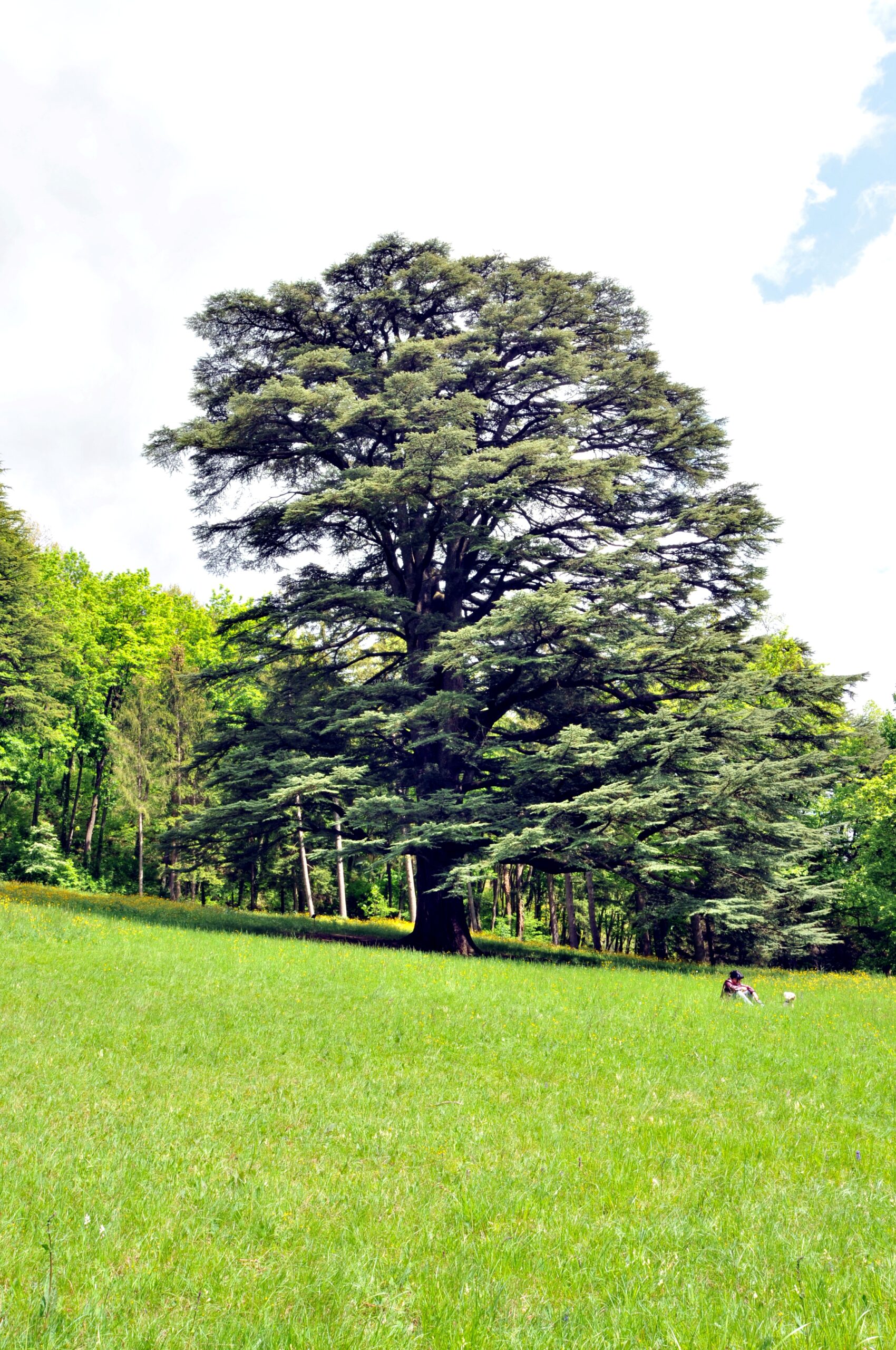
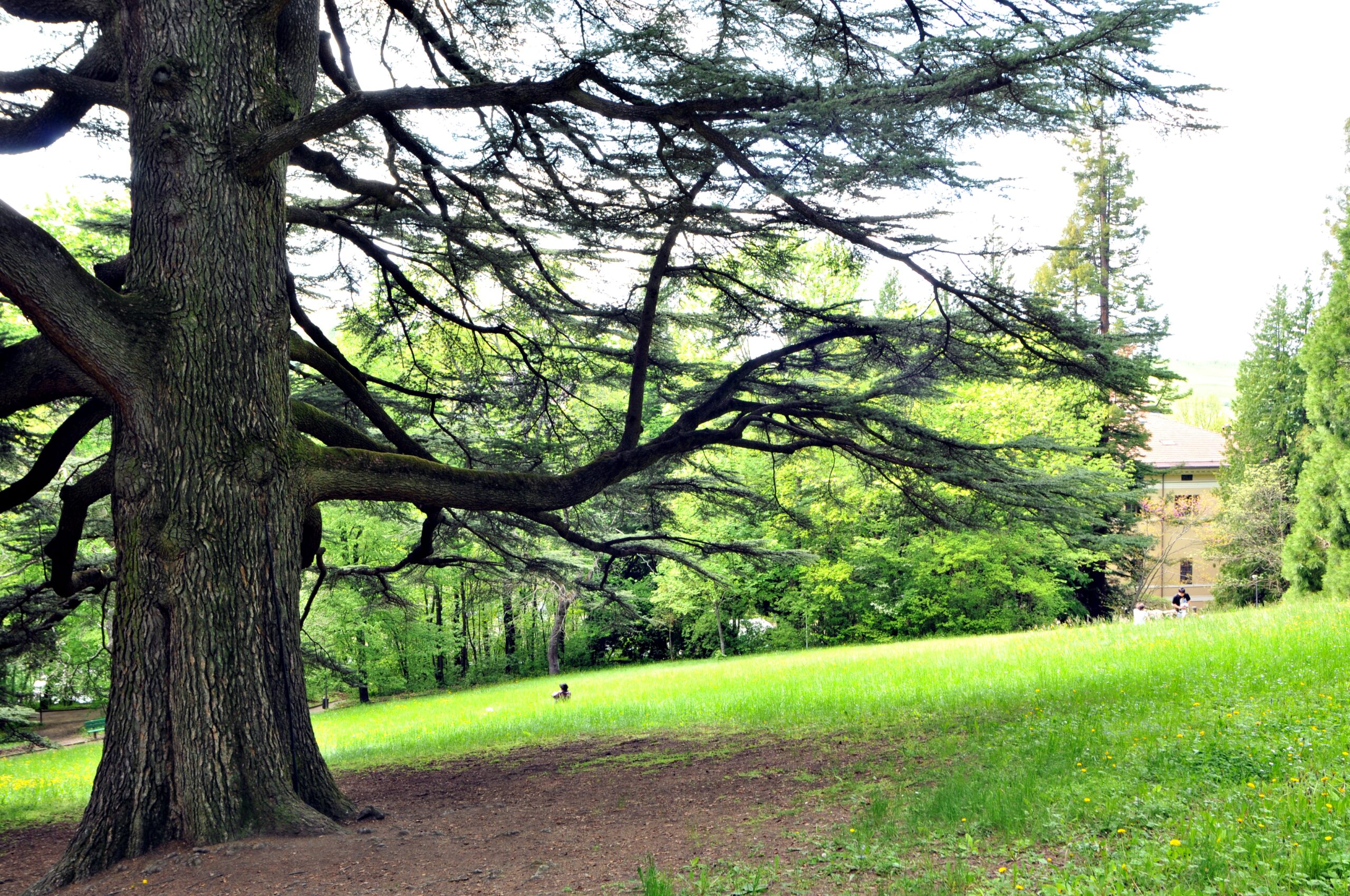
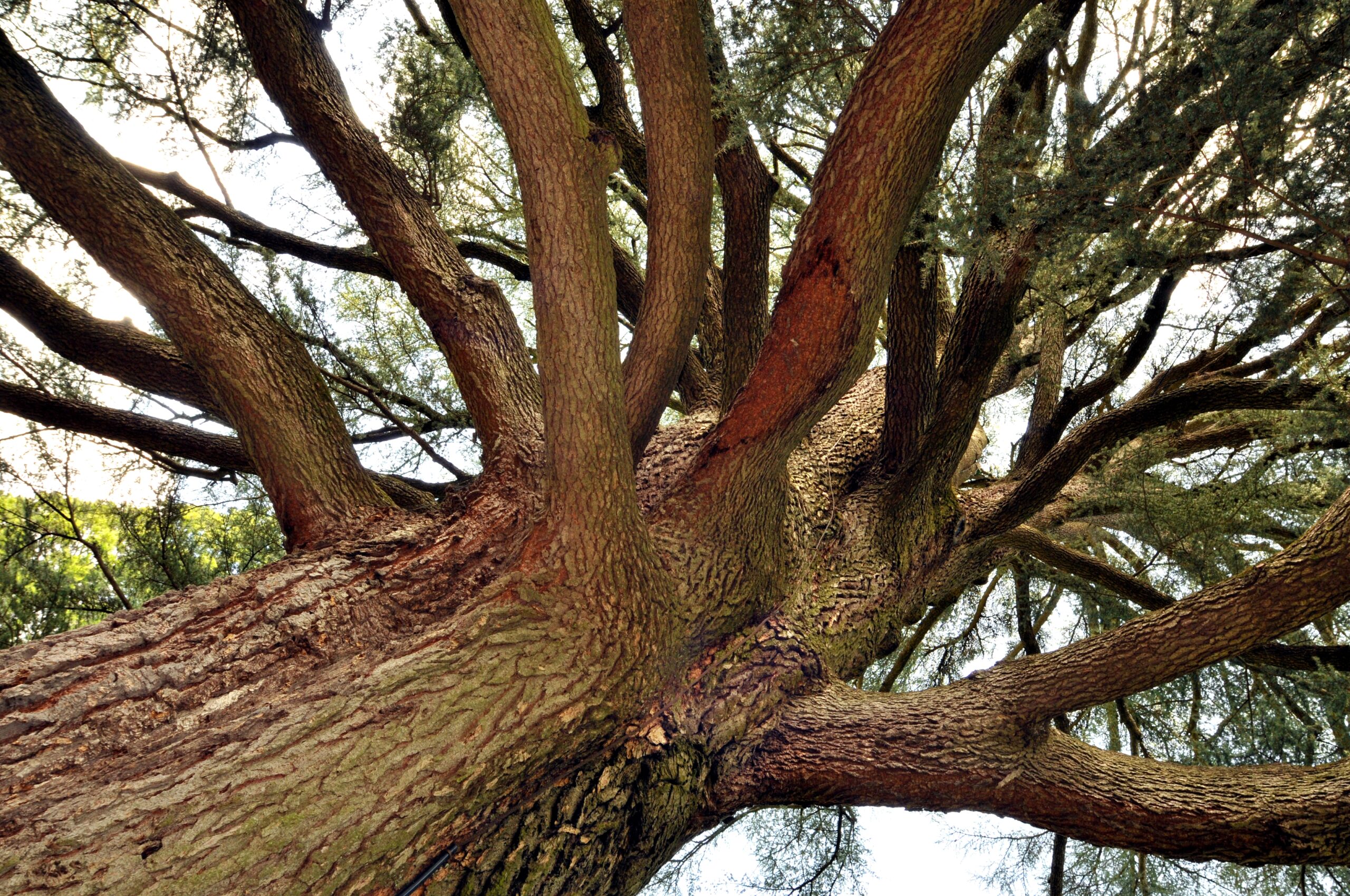
Il maestoso esemplare di Cedro del Libano, chiamato dai pavullesi “Pinone” è simbolo del Parco Ducale.
Il maestoso esemplare di Cedro del Libano, chiamato dai pavullesi “Pinone” è simbolo del Parco Ducale. Messo a dimora certamente dal giardiniere tedesco Carlo Huller che disegnò e realizzò il Parco per il duca Francesco IV, presenta una circonferenza di m. 5,50 e un’altezza di m. 38. La specie, originaria del medio oriente, venne introdotta in Europa nel 1683. In Italia i primi esemplari furono piantati nel 1787 nell’Orto Botanico di Pisa. Oggi è molto diffuso nei giardini per il suo bellissimo portamento e per il suo tronco potente, ramificato fin da basso. Il suo legno è forte ed estremamente durevole. Gli antichi egizi distillavano dal legno un olio particolare che usavano per l’imbalsamazione dei defunti. In epoca biblica, per la sua solidità e durevolezza, il legno del cedro era spesso usato per la costruzione dei templi e palazzi. Si ricorda che, durante l’ultima guerra il Pinone ha corso il rischio di essere abbattuto dai soldati tedeschi per ricavarne legna da ardere; tale intenzione fu scongiurata dall’intervento dell’allora podestà Ghibellini. La collocazione di questo esemplare al limite superiore del prato, favorisce la percezione a distanza di tutta la sua mole. Citato tra i cento monumenti vegetali più importanti d’Italia.
English version
The majestic example of Cedar of Lebanon, called “Pinone” by the people of Pavullo, is the symbol of the Parco Ducale
The majestic example of Cedar of Lebanon, called “Pinone” by the people of Pavullo, is the symbol of the Parco Ducale. Certainly planted by the German gardener Carlo Huller who designed and created the Park for the Duke Francesco IV, it has a circumference of m. 5,50 and a height of m. 38. The species, originating from the Middle East, was introduced in Europe in 1683. In Italy the first specimens were planted in 1787 in the Botanical Garden of Pisa. Nowadays is very widespread in the gardens due to its beautiful posture and its powerful trunk, branching from the bottom. The ancient Egyptians distilled a particular oil from wood which they used for embalming the deceased. In biblical times, due to its solidity and durability, cedar wood was often used for the construction of temples and palaces. It is remembered that, during the last war the Pinone ran the risk of being cut down by German soldiers to obtain firewood; this intention was avoided by the intervention of the then Ghibellini mayor. The placement of this specimen at the upper limit of the lawn, favours the perception of its entire size from a distance. Cited among the one hundred most important plant monuments in Italy